
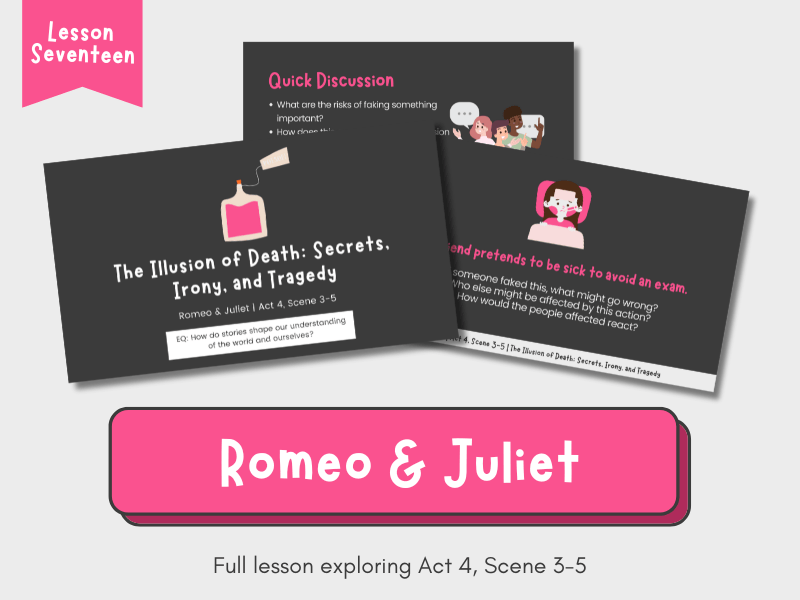
The Illusion of Death: Secrets, Irony & Tragedy – Act 4, Scene 3-5 Analysis
How do stories shape our understanding of the world and ourselves?
This lesson explores Act 4, Scenes 3-5 of Romeo and Juliet, focusing on Juliet’s fake death and its consequences. Through discussion and textual analysis, students will examine themes of secrecy, deception, dramatic irony, and the power of fate in shaping tragedy.
What’s Included?
- Full Lesson Plan – A structured guide with clear objectives and activities.
- Starter Task: Deception & Consequences – Students evaluate different acts of deception, predicting potential consequences:
- A friend fakes being sick to avoid an exam.
- A celebrity fakes their death to escape fame.
- A couple stages a breakup to see how their friends react.
- How do these connect to Juliet’s decision? Who suffers the most from deception—Juliet, her family, or Romeo?
- Act 4, Scene 3-5 Video Viewing – A performance of the scene to support comprehension.
- Close Reading Task – A 10-minute text analysis, followed by a written summary of key events.
- Socratic Circle Discussion – A guided discussion exploring:
- What are the risks of faking something important?
- How does Shakespeare create tension through dramatic irony?
- How does this deception contribute to the play’s final tragedy?
- Exit Task – Students complete the sentence:
- “Shakespeare creates tension in this scene by…”
Key Skills Developed:
- Analysing dramatic irony and tension in Shakespeare’s tragedy
- Exploring themes of secrecy, deception, and unintended consequences
- Engaging in structured discussion and literary analysis
- Developing critical thinking through real-world and literary connections
This lesson is ideal for GCSE English teachers looking to help students examine the role of secrecy and dramatic irony in shaping the play’s tragic ending.
Reminder: This lesson follows the Socratic Circle Workbook, available in Lesson 1. Find Lesson 1 and the full bundle in my TES resources for a structured approach to Romeo and Juliet.
Download now to explore the consequences of Juliet’s desperate plan and its impact on the unfolding tragedy.
If you found this resource helpful, please leave a review. Your feedback supports the creation of more high-quality resources.
Copyright Notice: This resource is for personal classroom use only. Redistribution, resale, or uploading to shared platforms (including school drives and VLEs not for personal classroom use) is strictly prohibited. If you need additional licences, please purchase them separately. © 2024. Revolutionary Education. All rights reserved.


Reviews
There are no reviews yet.