
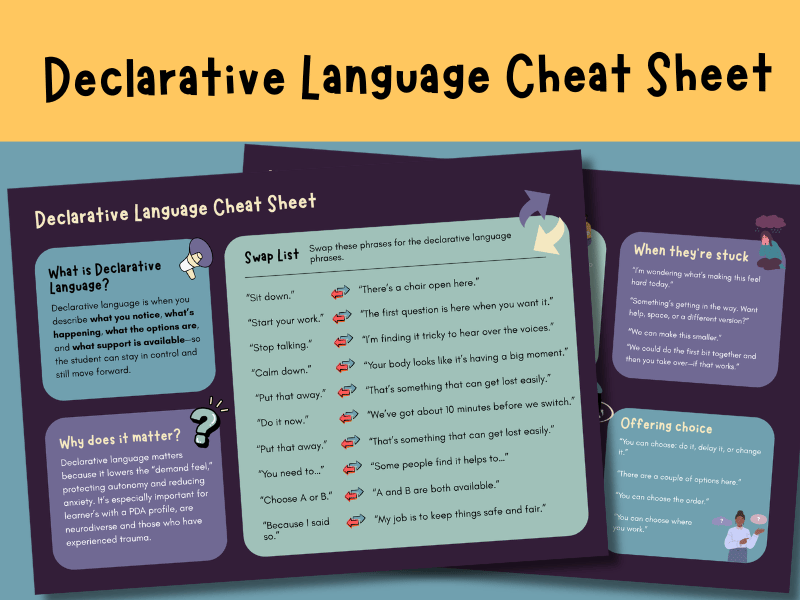
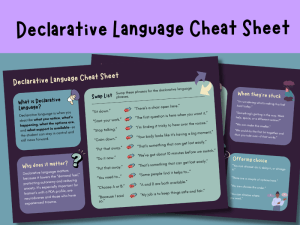
This simple, practical cheat sheet helps educators and support staff shift from directive language (commands and instructions) to declarative language (noticing, describing, offering options). It is designed to reduce the “demand feel”, protect autonomy, and support co-regulation, making it especially helpful for learners with a PDA profile, neurodivergent learners, and students impacted by ACEs or trauma.
Declarative Language Cheat Sheet
What’s included
-
A clear, educator-friendly definition of declarative language and why it matters
-
A swap list that converts common high-pressure phrases into low-demand alternatives
-
High-impact, ready-to-use phrases organised by situation:
-
Starting work
-
Behaviour and conflict
-
Transitions
-
Repair and boundaries
-
When they’re stuck
-
Offering choice
-
Who this is for
-
Teachers, TAs, mentors, pastoral teams, SEND staff, and inclusion teams
-
Alternative provision, PRUs, specialist settings, and mainstream classrooms
-
Anyone supporting students who experience anxiety, demand avoidance, shutdown, escalation, or low tolerance for perceived control
How to use
-
Keep it on your desk, lanyard clip, clipboard, or classroom wall for quick prompts in the moment
-
Use it as a shared language guide for consistent adult responses across staff
-
Pair it with behaviour support plans, regulation strategies, and restorative conversations
Why it works
Declarative language helps students feel safer and more in control by reducing pressure, power struggles, and threat responses. It communicates support, boundaries, and options without turning the interaction into a win/lose dynamic.
Reviews
There are no reviews yet.