
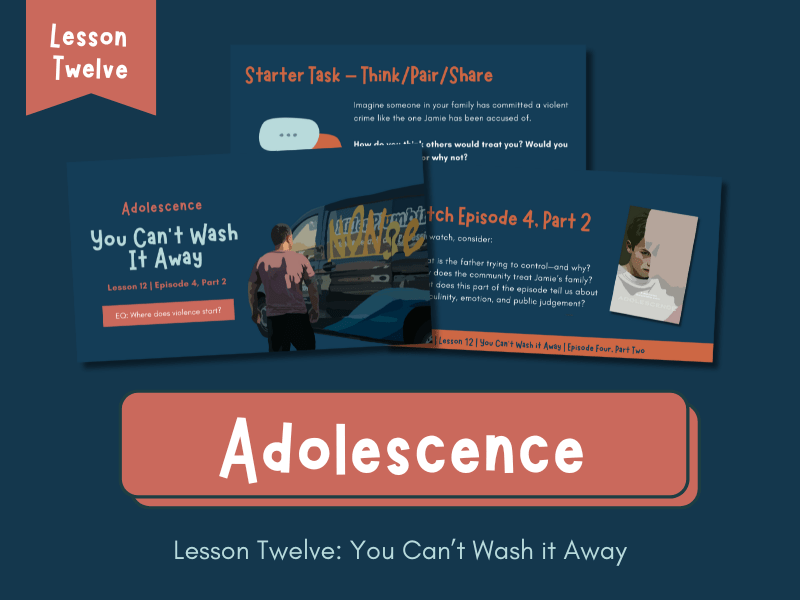
In this emotionally complex KS4 PSHE lesson, students reflect on the fallout of violence from the perspective of the perpetrator’s family. Based on Episode 4, Part 2 of the Netflix series Adolescence, the lesson follows Jamie’s father as he struggles to cope with grief, shame, and public harassment following his son’s arrest.
Titled You Can’t Wash It Away, this lesson invites students to explore how guilt, denial, and powerlessness manifest within families after tragedy. Through a Socratic Circle discussion, learners analyse the symbolism of the father attempting to remove graffiti from his van, his confrontation with the public, and the emotional toll of shame and judgment. Themes of control, masculinity, justice, and grief are central to the conversation.
This session creates space for empathy, reflection, and emotional literacy — helping students understand the hidden impact of violence on those left behind.
💡 What’s Included in Lesson 12
Each lesson in the Adolescence PSHE series includes:
-
PowerPoint presentation (PPTX) – ready-to-teach version
-
Editable Canva version – adapt for your class or school context
-
PDF version – for easy printing or projection
-
Full lesson plan – with objectives, trauma-informed teaching tips, and delivery guidance
-
Observation form – for peer or mentor reflection
-
Student discussion questions – from the Socratic Discussion Student Book
-
Teacher guidance notes – from the Socratic Discussion Teacher Guide
-
Project rubric – for summative assessment and end-of-unit evaluation
🧠 In this Lesson, Students Will:
-
Explore how guilt, shame, and grief shape family relationships after violence
-
Reflect on masculinity, control, and emotional repression in parental figures
-
Discuss community judgment, public image, and stigma after tragedy
-
Analyse symbolic moments and visual storytelling within the episode
-
Build empathy through dialogue about accountability and compassion
🧩 Lesson 12 Features:
-
Full 60-minute lesson presentation
-
Starter and exit reflection tasks
-
Clear learning objectives displayed on slides
-
Structured Socratic Circle format with timing guidance
-
Sentence starters and prompts for sensitive discussion
-
Student and teacher resources for guided reflection
🧍♀️ Perfect For:
PSHE | Citizenship | RSE | English crossover lessons
This resource supports students in developing empathy, critical thinking, and emotional literacy. It helps them examine how trauma, responsibility, and societal judgment intersect — encouraging meaningful reflection on justice and humanity.
🌱 Themes Explored:
-
Community judgment and shame
-
Parental guilt and emotional regulation
-
Masculinity and emotional suppression
-
Public vs private grief
-
Justice, responsibility, and empathy
🔒 Copyright Notice
This resource is for single-classroom use only.
Please do not reproduce, share, or distribute without appropriate licensing.
All content copyright © Revolutionary Education.
🌟 If You Enjoy This Resource…
If this lesson inspired thoughtful discussion in your classroom, please consider leaving a review to share your experience. Your feedback helps other educators discover trauma-informed PSHE resources that make a lasting impact.
ks4 pshe lesson | adolescence series lesson plan | teaching grief and trauma | parental guilt and shame | toxic masculinity pshe | youth justice pshe | socratic circle lesson ks4 | violence and emotional fallout | public perception of crime | masculinity and accountability


Reviews
There are no reviews yet.