You know your child is interested in space, animals, gaming, football or Ancient Egypt, but how do you turn that interest into meaningful learning?
Perhaps you have tried printing a collection of worksheets, only to find that the excitement disappears as soon as the “work” begins. Or maybe you have seen elaborate home education projects online and wondered whether you are supposed to be building a life-sized volcano, creating a documentary and visiting three museums before lunchtime.
Project-based learning does not need to be that complicated.
At its heart, it means learning through investigating a meaningful question, problem or challenge and creating something in response. It can bring together reading, writing, maths, science, creativity, research and practical skills without forcing every subject into a separate lesson.
This guide explains what project-based learning is, what it is not and how you can use it flexibly in home education, without turning yourself into a full-time curriculum designer.
What is project-based learning?
Project-based learning, often shortened to PBL, is an approach in which a learner develops knowledge and skills by investigating a question, challenge or problem over time.
Instead of learning information first and completing a project afterwards, the project creates the reason to learn. A child encounters questions, gaps in their knowledge and practical problems as they work towards an outcome. They then read, research, calculate, experiment, design, discuss or seek help because those things enable them to move the project forwards.
For example, a child might decide to create a wildlife-friendly area in the garden. To do that, they may need to:
- identify local plants and animals
- research habitats and food chains
- measure the available space
- work within a budget
- compare suitable materials
- draw a scaled design
- write instructions or information signs
- observe and record what visits the area
The science, maths, literacy and problem-solving are not separate activities added to the project to make it “educational”. They are part of completing a meaningful task.
A project could result in a model, exhibition, campaign, performance, podcast, story, event, experiment, product, presentation, garden, game or proposed solution. It does not have to involve a physical object, and it certainly does not need to look Pinterest-perfect.
Where did project-based learning come from?
The basic idea of learning through purposeful activity is much older than the current term “project-based learning”. Practical project methods appeared in European architectural and technical education centuries ago and were later used in American agricultural and industrial education.
The approach became closely associated with progressive education in the late nineteenth and early twentieth centuries. The philosopher and educator John Dewey argued for education rooted in experience, inquiry and participation rather than the passive reception of disconnected information. William Heard Kilpatrick, who worked with Dewey, popularised the term “project method” through an influential essay published in 1918.
It would be too simplistic to claim that Dewey invented modern PBL, or that he and Kilpatrick held identical views. Educational historian Michael Knoll traces a longer and more complicated development, including the movement of project methods from technical education into general schooling. What these early approaches shared was an attempt to connect knowledge with purposeful activity and real problems. You can read Knoll’s historical account of the project method here.
Modern versions have developed those ideas further, usually placing emphasis on sustained inquiry, learner choice, feedback, revision and the creation of a meaningful final outcome.
Is project-based learning just topic work?
Not quite.
In conventional topic work, an adult might select “The Romans”, teach a series of lessons and then ask the child to make a Roman shield or produce a poster. The project demonstrates or reinforces learning that has already taken place.
In project-based learning, the project drives the learning itself.
A child might instead investigate:
How could we create a museum experience that helps local families understand Roman life?
That question creates a genuine need to explore historical evidence, distinguish between what is known and what is uncertain, select information for an audience, write explanations, design exhibits and perhaps calculate dimensions or costs.
A useful way to recognise PBL is to ask:
If we removed the final product, would the learning process still look much the same?
If the answer is yes, the project may simply be an activity added at the end. If researching, calculating, testing and communicating are necessary because of the project, it is closer to project-based learning.
That does not mean ordinary topic work or craft activities are inferior. They can be enjoyable and valuable. They simply serve a different purpose.
Why does project-based learning suit home education?
Project-based learning can be particularly adaptable at home because it does not depend on thirty children completing the same task, at the same age and within the same timetable.
You can begin with your child’s interests, use your local environment and adjust the scope as you go. A project can last three afternoons or develop over several months. Siblings may contribute at different levels, while a child who finds handwriting difficult could demonstrate sophisticated understanding through discussion, photography, model-making, animation or audio.
It also challenges the school-based assumption that meaningful learning must always be divided into discrete subjects. Outside school, knowledge rarely arrives in tidy 45-minute sections. Planning a journey involves geography, reading, budgeting and time. Producing a film may involve storytelling, art, technology, communication and organisation. Restoring a bicycle brings together mechanics, measurement, research and practical problem-solving.
This does not mean subjects cease to matter. Subject knowledge helps children think accurately and move beyond surface-level exploration. PBL simply allows that knowledge to be encountered and used within a connected context.
In England, home-educating families are not required to follow the National Curriculum or reproduce a school timetable. Parents are responsible for providing an efficient, suitable, full-time education that takes account of their child’s age, ability, aptitude and any special educational needs.
Government guidance also recognises that children learn in different ways and at different speeds, and that families may change their approach over time. You can read the Department for Education’s guidance on elective home education for more information.
The precise legal position differs across the UK, so families in Scotland, Wales or Northern Ireland should consult the guidance applying where they live.
What does the research say about project-based learning?
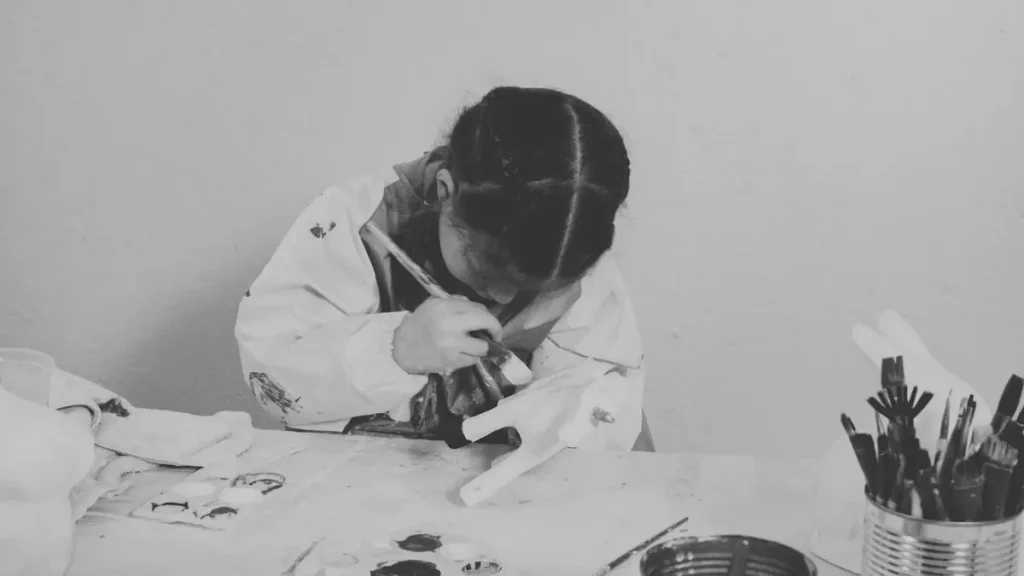
There are good educational reasons to use well-designed projects, but we should avoid presenting PBL as a guaranteed route to better outcomes.
A 2017 review by MDRC described the evidence as “promising but not proven”. It found encouraging results in some subjects while also identifying significant differences in how PBL was defined, delivered and measured. You can read the MDRC literature review here.
A large 2023 meta-analysis reported positive overall effects on academic achievement, thinking skills and attitudes towards learning. However, the studies covered different ages, subjects and forms of implementation, so the headline finding should not be treated as proof that every project will outperform every other method. You can read the open-access meta-analysis here.
There are less positive findings too. An Education Endowment Foundation trial of a particular school-based PBL programme found no evidence of improved literacy or engagement, while also reporting substantial difficulties with implementation. You can read the EEF project evaluation here.
My professional judgement is that PBL is best viewed as one useful approach within a varied education. It can create a compelling reason to read, write, calculate and think, but children may still benefit from explicit explanations, direct teaching, practice and carefully chosen resources when they encounter something new or difficult.
How to plan project-based learning in home education
You do not need a complicated planning template or a term’s worth of learning objectives. Start with a manageable project and allow it to develop.
1. Begin with an interest, problem or experience
Notice what your child talks about, makes, collects, watches or repeatedly asks. A project can also grow from an experience, such as finding frogspawn, visiting a castle, seeing litter beside a canal or trying to design something that does not yet work.
The starting point does not need to sound academic. Interests such as Minecraft, make-up, trains, football, fashion or cats all contain routes into wider knowledge. The challenge is not to disguise a worksheet with a favourite character. It is to find a genuine question or possibility within that interest.
2. Develop a useful driving question
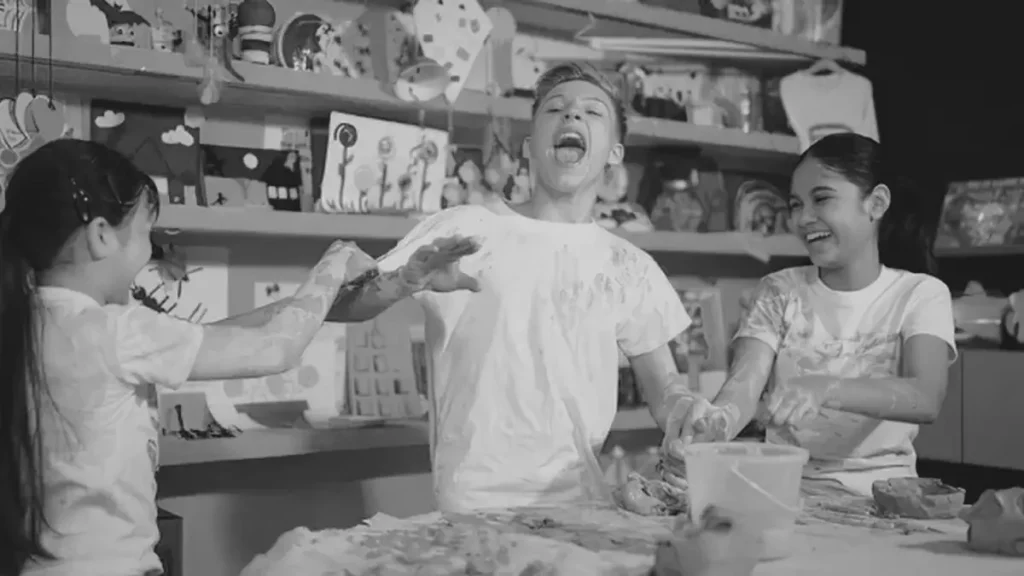
A driving question gives the project direction without reducing it to one correct answer.
For example:
- Space: How could humans live on Mars?
- Animals: How could we improve life for animals in our local area?
- Gaming: Can we design a game that is enjoyable, fair and accessible?
- History: How could we help people understand what daily life was really like in Ancient Egypt?
- Food: Can we create a nutritious family meal within a set budget?
- Local area: How could we make our neighbourhood more welcoming for children?
Questions beginning with how could we, what would happen if or can we design often provide more room for inquiry than questions that simply ask for facts.
You can offer two or three possibilities if an entirely open choice feels overwhelming. Choice is only empowering when it is manageable.
3. Choose an outcome
Ask your child what they would like to make, change, organise or communicate. Possibilities include a short film, model, comic, exhibition, recipe book, podcast, campaign, nature area, performance, guide, computer game or proposal.
Keep the outcome proportionate. A seven-year-old’s “documentary” might be a 90-second video filmed on a tablet. A teenager might write, film and edit a structured ten-minute piece using multiple sources.
The outcome is there to give the learning a purpose, not to create weeks of stress.
4. Map the learning that fits naturally
Once you have an idea, consider what your child may need to know, understand or be able to do. You might identify opportunities for:
- reading and evaluating information
- purposeful writing
- speaking and presenting
- measuring, estimating or budgeting
- scientific observation and investigation
- historical or geographical understanding
- art, design or digital creation
- planning, decision-making and reflection
Do not force every subject into every project. Adding an unrelated multiplication worksheet because the project “needs some maths” weakens the connection rather than strengthening it. Continue other learning separately where needed.
For older children working towards qualifications, you can map parts of a project against relevant exam specifications. The project can provide context and application, while focused study fills any gaps.
5. Investigate and create
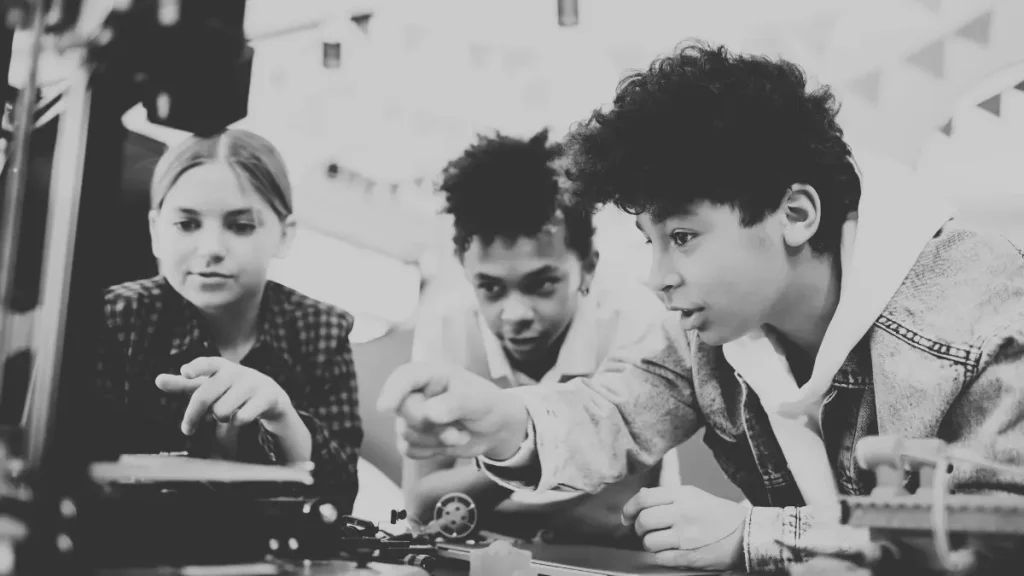
This is usually the longest stage. Your child might read books, watch carefully selected videos, visit somewhere relevant, interview someone, gather data, test materials or produce several versions of an idea.
Your role will depend on the child. You might:
- help find accessible sources
- read difficult material aloud
- model how to take notes
- teach a specific skill
- ask questions that deepen their thinking
- help break the work into visible steps
- provide practical or emotional support
- arrange a visit or conversation with someone knowledgeable
Independence does not mean leaving a child to struggle alone. Support can be gradually adjusted as their confidence and skills develop.
6. Share, reflect and record
An audience can make the work feel purposeful, but “public presentation” does not have to mean standing in front of a group. A child could share the outcome with one trusted person, email it to a relative, display it at home, upload it privately or simply talk you through it.
Reflection can be informal:
- What are you most pleased with?
- What changed from your first idea?
- What was difficult?
- What did you discover?
- What would you do differently next time?
- What would you like to explore next?
Take a few photographs and note significant conversations, decisions, skills and discoveries. This gives you a much fuller record of learning than judging the polished appearance of the final product.
A simple project-based learning example
Imagine a child who is fascinated by cats. Together, you develop the question:
How could we help new cat owners understand what their cat needs?
The child decides to create a beginner’s guide. During the project, they might investigate feline behaviour, nutrition, anatomy, domestication and animal welfare. They could compare the cost of food and equipment, calculate a monthly budget, interview someone who works with animals and decide which online claims are trustworthy.
A younger child might label drawings, dictate sentences, sort items into categories and make a short video. An older child could investigate conflicting welfare advice, compare sources, analyse costs and design a detailed digital guide for a defined audience.
Both children are exploring the same broad project, but the depth, support and outcome reflect their different stages of development.
Making project-based learning work for neurodivergent children
Project-based learning can offer flexibility, meaningful choice and different ways to communicate understanding. However, it is not automatically accessible simply because it is interest-led.
Open-ended projects can place heavy demands on planning, task initiation, working memory, decision-making and switching between activities. Some children may become absorbed in gathering information but find it difficult to begin the final outcome. Others may have an ambitious vision that exceeds their current energy, motor skills or tolerance for frustration.
Helpful adaptations might include:
- offering a small choice rather than an unlimited one
- showing the stages visually
- reducing the project to one clear next action
- working alongside the child
- using speech-to-text, audio, video or images
- separating research from decision-making
- providing examples without demanding imitation
- scheduling recovery time after visits or social tasks
- allowing the project to pause without treating that as failure
A deep interest can be a rich foundation for learning, but it should not become something a child must constantly “earn” by completing unrelated work. It is also reasonable for a child to enjoy an interest without turning every part of it into education.
What if the project fizzles out?
Some projects will be abandoned. That does not necessarily mean they were unsuccessful.
A child may have answered the question that interested them, discovered that the outcome was too large or simply moved on. You can talk together about whether to:
- reduce the scope
- change the final outcome
- record what has already been learnt
- save it for later
- bring it to a deliberate close
Sometimes the useful learning lies in realising why a plan was unrealistic or why a design did not work. However, we should not romanticise every abandoned task as a triumph. Children also need help developing perseverance, revising plans and completing manageable pieces of work.
The key is distinguishing productive challenge from a project that no longer has meaning or has become inaccessible.
How do you assess learning through projects?
You do not need to grade the finished product. In fact, an impressive model may have involved very little thinking, while a messy prototype may represent significant reasoning and revision.
Look instead at the process:
- What does your child now know or understand?
- What can they do that they could not do before?
- Can they explain their decisions?
- Did they use information accurately?
- Could they apply the learning in another context?
- What still needs support or direct teaching?
Save occasional samples, photographs, voice notes or brief observations. If you keep home education records or prepare information for your local authority, these can help you describe how your child’s knowledge and capabilities are developing over time.
Project-based learning does not have to take over everything
PBL can be powerful, but you do not have to build your entire home education around it. Some children adore extended projects. Others prefer shorter activities, clearly defined tasks or direct teaching. Many families use a mixture.
You might have one project running gently in the background alongside maths practice, shared reading, classes, outings and ordinary family life. You might use projects for science and history but take a different approach to learning a language. You may complete several projects one season and none the next.
The goal is not to prove that your home education looks creative enough. It is to use an approach when it helps your child connect knowledge, pursue meaningful questions and create something they care about.
A realistic place to begin
Project-based learning means using a meaningful project as the vehicle for learning, rather than teaching a topic and attaching a craft at the end. In home education, it can begin with one interest, one worthwhile question and one manageable outcome.
This week, notice something your child is already curious about. Ask, “What could we make, investigate or change using this?” Choose the smallest version of the idea and see where it leads. You do not need to plan every subject connection in advance. Many of the richest learning opportunities will appear as the project develops.
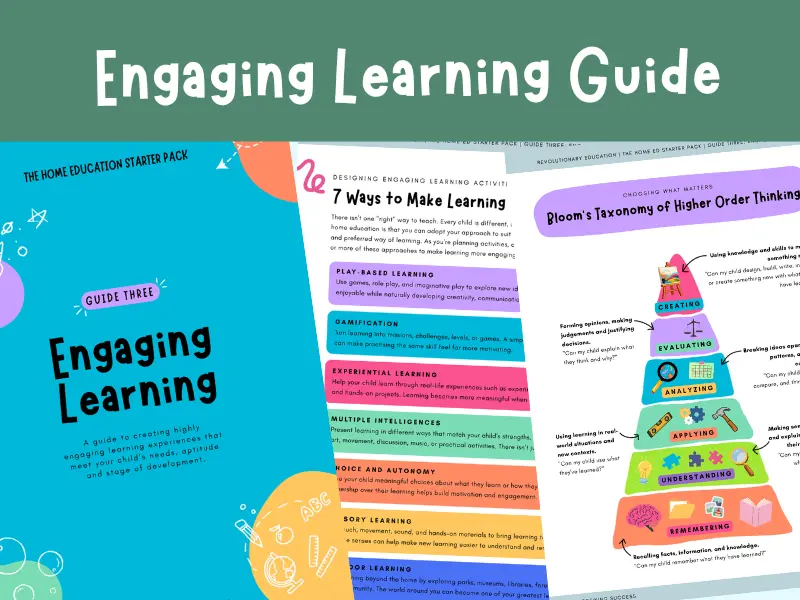
If you would like more support, the Engaging Learning Guide takes you through building personalised learning around your child’s interests. It includes a practical project-planning process, different types of project and a large collection of ideas you can adapt to your child’s age, needs and preferred ways of learning. It is also included as part of the Revolutionary Education Home Ed Collective.