Foreword
This is the long version of my story—raw, unfiltered, and deeply personal. I’m not sharing it for sympathy, but because I believe in the power of truth-telling and connection. Revolutionary Education was born from these experiences. By opening this window into my past, I hope others feel less alone in theirs—and that those working with young people pause to consider how much they may never know about a child, or why they behave the way they do.
The names of individuals in this account have been altered to maintain anonymity and confidentiality.
Trigger Warning: This blog contains references to childhood trauma, abuse, domestic violence, and suicide. Please take care while reading. If you’re in distress or need urgent support, you are not alone. Here are some UK-based helplines you can use to find help:
- Samaritans – Call 116 123 (free, 24/7) or visit samaritans.org
- Childline – For under 19s, call 0800 1111 (free, 24/7) or visit childline.org.uk
- NSPCC – For concerns about a child’s safety, call 0808 800 5000
- Domestic Abuse Helpline – Call 0808 2000 247 (free, 24/7) for support from Refuge
- SHOUT – Text SHOUT to 85258 for free, confidential mental health support via text, 24/7
Chapter 1: An Unknown Mark

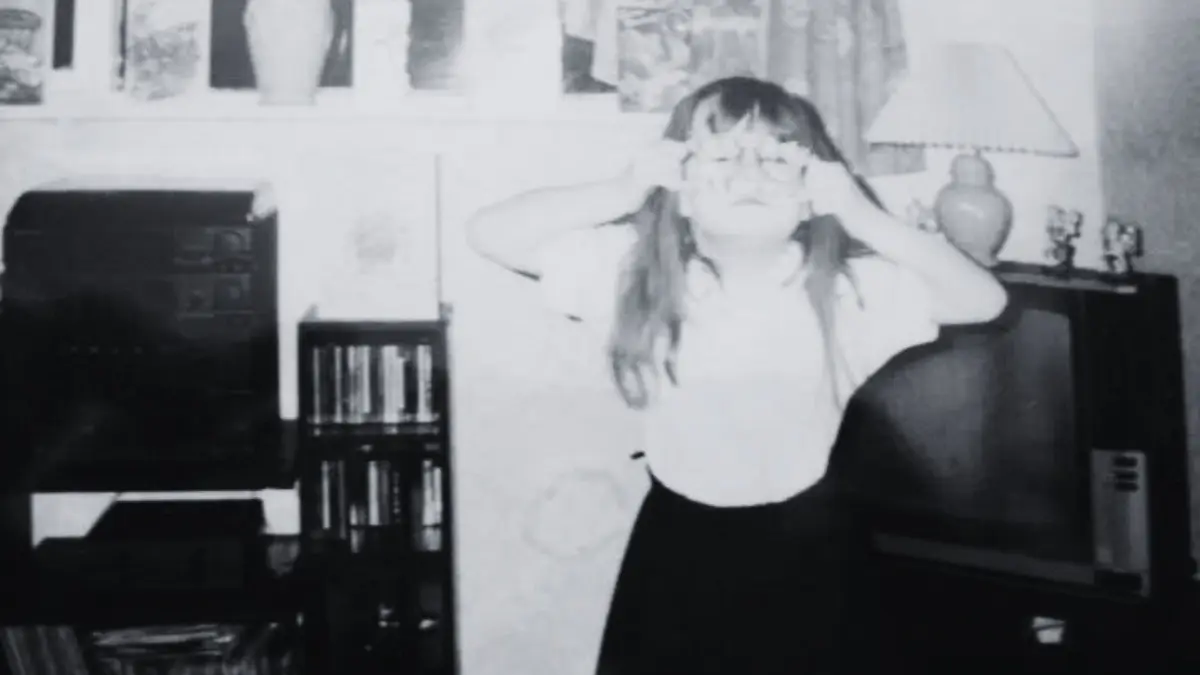
“Natalie has already decided she’s fed up with the world.” Those were my nursery teacher’s exact words, handed to my mum like a verdict on a scrap of paper. Four-year-old me, it seems, had already concluded that life was mostly a disappointment.
I have virtually no memory of that little girl, but the description fits like a hand‑me‑down jumper: stretched, familiar, and a little sad.
The truth is, my childhood before six is a smear of half‑formed pictures. I know things about that time—where we lived, when Dad picked us up, the night police raided our house. But I remember none of it.
Only one scene stands out from back then. It’s dim, hazy and sharp round the edges. I’m in the cellar. Bare concrete numbs my feet. I am looking up at the drab, grey steps that lead to a closed door. No handrails. I’m alone.
In the corner of the room sits a pink Barbie tent. I have no idea why I’m down here or why the door is shut. I only know I feel small. Really, really, small.
Chapter 2:Temporary Relief

We moved out of that house when I was six. I measure that day by the scent of lemons. Mum was slicing them in half and placing them in every uncarpeted corner, trying to mask the stench of cat piss. I’d been told to stay out of the way, so I sat on the porch step, fists crammed with crayons, furiously scribbling over a picture of a cat in the colouring book she gave me.
A shadow fell across the page.
“My name’s Jenna,” the girl said, plonking herself down beside me. “I’m six.”
“I’m six too!” I beamed.
And just like that, Jenna became my best friend. We ended up at different primary schools, but every night we’d play out until our mums called us in for tea. Later, we’d survive secondary school — and all the chaos that came with growing up on a council estate in the ‘90s.
Chapter 3: Torn Wide Open

From the first day of primary school, every morning was a war at the classroom door. I’d cling to the railings as my teacher tried to pull me in, tears streaming down my cheeks, calling out for mum not to leave me.
She was abandoning me! This is what six year old me believed.
Mum walked down the hill and out the school gates with her head hanging in shame. Nobody else’s child acted like this. It didn’t stop till year three.
When I learned how to escape, the wars stopped. I’d locate a gap in the fence at play time, wriggle my way through and sprint across the field home like Forest Gump. At first the teachers chased me, begging me to come back, listing off all the consequences if I didn’t. But it soon became predictable. They’d fix the gap in the fence, I’d find another one. The other kids would scream “She’s escaping again” and they’d phone home.
Mum would be waiting by the green bin, clad in her favourite dressing gown and slippers, a lit single menthol hanging from her bottom lip and a stern look on her face.
“Get in!” She’d say through gritted teeth.
But I didn’t care that she was angry. I cared that I was home.

On the days when I was too tired to bolt from school, I’d ricochet around the classroom instead. I didn’t want to sit in a seat all day. I wanted to draw. I wanted to talk. I wanted to paint and discover cool new things.
Nobody knew I had ADHD — least of all me. When teachers demanded I fill in worksheets or sit nicely on the carpet while they spoke, I dug my heels in and sternly told them no.
As the years passed, frustration fermented into fury. I became aggressive. Hostile. Hard to be around. I fought. I threw things. Most days, I erupted like a volcano — my words molten, scalding everyone in my path.
“When you’re good, you’re very good — but when you’re bad, you’re horrid.”
I lost count of how many times I sat in the headteacher’s office, my mum beside me, teachers repeating that same old line.
Mum called me a problem child.
School called me difficult.
Outbursts. Fights. Defiance. Detentions. Suspensions. Endless phone calls home.
Nobody seemed to know what to do with me.
And nobody stopped to ask what was happening beneath the surface.
Chapter 4: The Infection Beneath the Bandage

Not long after the move into our new house, Mum fell in love with the milkman. It sounds like the start of a bad rom-com — but it was more like true crime. I sensed bad news at the first sniff. He seemed nice at first, but their so-called love story soon curdled into destruction.
My stepdad (we’ll call him Dave) had a habit of smashing up furniture whenever Mum caught him cheating. Like most narcissists, he wasn’t big on accountability. He never hit her — not with his fists — but his words were knives, and any rage he couldn’t throw at her, he took out on the furniture, the doors, the TV, the living room walls.
Outside wasn’t much safer. We grew up on an estate full of flashing blue lights and screaming sirens. Drug raids. Bottle fights. Suicide attempts. Kids setting fire to bins just to watch something burn. Once, we stood at the bottom of the flats with the police, watching someone try to jump from the tenth floor.
Inside our house, the chaos just kept circling. Mum was completely infatuated with Dave — so much so that when he left, she tried to end her own life. I remember thinking, She doesn’t love me enough to stay.
My gran tried to end her life. So did my dad and my sister. It seemed like nobody wanted to stick around.

Weekends at dad’s wasn’t a sanctuary from anything. If he and Mum had fallen out that week — which was most weeks — we’d end up stuck in the middle of a screaming match in the car park, waiting to find out if we were going to his or not. If we did go, the rules were strict: elbows off the table, feet off the couch, voices low. And never disagree.
Everything was about control. But when no one was watching, someone much older — someone who was meant to protect me — hurt me. Again and again. In ways no child should ever experience. I was six when it started.
“No one would believe you anyway,” he’d hiss.
And he was right — wasn’t he?
I was the naughty one. The troublemaker.
Who would ever believe a kid like me?
Chapter 5: Old Wounds, New Scars

When I was around eight, Dave swapped milk floats for aircraft mechanics. It meant more money for Christmas presents — and him working away for months at a time.
When he was gone, Mum and I sometimes found peace: shared beds, movie nights, slow mornings filled with quiet cuddles. In those moments, I almost felt safe.
But as soon as he came back, everything shifted. She’d find out about another affair. He’d smash the place up. She’d spiral.
Once, he went round the house cutting the plugs off every appliance. Another time, she keyed his car in broad daylight. The air always felt ready to crack.
There was so much chaos at home — too much to fit in a blog post. But I learnt early how quickly stability could vanish.
Some nights, it felt like the whole house gave out all at once. And I was left holding my breath, wondering what version of home I’d get that day.
Chapter 6: Reopened Stitches

I never started secondary school — at least not in the usual way. Near the end of Year 6, Mum decided she was done with Dave for good and whisked us off to Cyprus.
No school? Excellent.
I was sad to leave my cats and Jenna, but two months in a two-bedroom apartment with a pool on site didn’t sound too bad.
I spent my days trying to beat my underwater swim time while Mum sunbathed and Dan hung out with the local teens. Evenings meant steak houses and Mum getting hit on by the local waiter. But the money was running out.
Mum started speaking to Dave again. He flew out. They made up. I was furious.
We landed back in rainy Manchester — only to be packing our bags three days later. This time to a less sunny part of the world: Northern Ireland.
Dave had landed a job there, and we were going (it wasn’t up for discussion).

I started secondary school in Bangor and slipped into a goth phase. Black lipstick, dog collar and the mood to match. I made friends, but they weren’t Jenna. I felt more alone than ever, and I hated that Mum and Dave were back together.
Then 9/11 tanked the aviation industry, and we had no choice but to move back home.
Chapter 7: Self‑Suturing

I still remember the feeling in my chest that morning — walking through the secondary school doors like I owned the place. Jenna stood at the end of the hallway. I kicked the doors open and shouted, “Look who’s here, bitches.”
I was done waiting for someone to rescue me. The only person who was going to protect me… was me.
The first teacher I saw, I told to fuck off. Jenna laughed, and something about it felt good. From that moment on, I swung first. Better to be the storm than the target.
I skipped lessons, picked up smoking, dabbled in weed and booze. I talked back, rolled my eyes, refused to cooperate. But it went deeper than that.
I was angry. Defensive. Explosive.
I’d fly off the handle at the slightest thing. Get into fights. Hurl chairs. Flip tables.
I wore whatever the hell I wanted — the wrong shoes, my skirt hitched up, rainbow socks pulled to my knees like armour. Some days I showed up just to cause chaos. We’d vandalise the girls’ toilets, scratch words into cubicle doors, lock ourselves in and refuse to come out.
Other days, we didn’t bother going in at all. We’d sprint off across the school field, outrun teachers and spend the day brook-jumping at the nearby farm, wet socks and all. Anything was better than sitting in a classroom pretending everything was fine.
There were two kinds of teachers I came across most days: the ones who said, “You’ve got potential, Natalie — you just don’t use it,” and the ones who sneered, “You’ll never amount to anything.”
Neither type helped. So I gave them what they expected. And worse.
Chapter 8: Saline & Sunlight

By Year 9 my timetable was a patchwork of exclusions. Most teachers refused to have me in their classes entirely, so I spent days (when I was in school) in “the unit”—a windowless portacabin copying lines of I must not….
At this rate, my future was looking pretty bleak. I wouldn’t be making it to year 10 if it continued.
The school assigned me a learning mentor. It was something they were trialling — their last straw. I’m pretty sure they had as much faith in it as I did: which was none.
At first, I was defensive, like always. I circled her the way a shark circles its prey.
What did she want from me? Was she going to give me another spiel like all the teachers did? Did she not realise I’d heard it all before?
But then she threw me a curveball. She didn’t do any of it. In fact she did the exact opposite. She made me tea.
“How many sugars, Nat?” she asked, sliding a steaming mug across the desk.
She pottered about her office, organized her files and shuffled papers. I sat, silently, weighing her up, now and then telling her exactly what I wouldn’t do. But she didn’t ask me to do anything. She didn’t give me the usual speech about effort and attitude or how I was at risk of exclusion. She simply let me be.
That tiny gesture cracked something open.
She became an adult I could trust. I confided in her. She listened —no judgment, no pity, no advice. I realized she actually wanted to help me.
Stacey enrolled me onto an anger‑management course. It was run by a gentle woman in her sixties at a centre far from school. There I sat in circles with a small group of kids like me. We talked about our anger, wrote poems and drew pictures. I learned to talk about my feelings instead of throwing punches.
But there was still a lot of work to do — and school just wasn’t working for me.
Stacey found an under-sixteens college programme designed for kids at risk of exclusion and asked if I’d be interested.
Dance and drama on Wednesdays? Cooking on Thursdays? I jumped at the chance.
That’s where things really started to shift.
Chapter 9: Movement That Mends

At college, teachers were on a first-name basis. I could wear what I wanted — comfortable clothes that didn’t scratch or make me feel like tearing my skin off. No more sitting still while someone parroted information that had nothing to do with the real world — or my life.
I could finally move. Create. Breathe.
I was surrounded by other so-called “problem kids,” and for the first time, I felt like I actually belonged.
Dance became my therapy and drama became my voice. I choreographed my pain and turned my rage into storytelling.
At fifteen I was permanently expelled from school but I was thriving at college. There were no ‘fuck you’s’ to teachers. I was getting distinctions all round and loved every minute of it.
At sixteen I got my BTEC First Diploma in Dance, and eventually moved onto the National Diploma at a college further afield.
I eventually outgrew college. I wanted to work and earn money and see what else was out there.
Dance wouldn’t become my career—but it saved my life when I was drowning.
Chapter 10: Battle‑Scarred & Unbroken

The dance studio flung the world wide open.
I was surrounded by new ideas, new possibilities. We studied the theory behind movement — how the founder of contemporary dance shattered expectations and broke every rule. We watched Matthew Bourne’s Swan Lake in a real theatre, and it opened up doors I never knew existed.
We project-managed our own shows, wrote our own monologues, performed to real audiences. We were trusted to lead — and because of that, our confidence soared.
With it all, we learned how to turn our pain into art, how to speak and solve problems.
It was the first time I saw a life beyond survival. The first time I thought: maybe I don’t have to stay here.
But back home, everyone around me seemed to be getting pregnant, doing drugs, or going to prison. I could feel the walls closing in.
Something in me shifted and I knew I wanted out. I wanted to learn. To live. To travel. To see what else the world had to offer.
After leaving the world of dance, I took every job I could find: retail, bars, leaflet drops, Avon, cleaning, the chippy, an ice rink, a nightclub.
At eighteen, I landed a seasonal job overseas — and caught the travel bug for good.
I came home, juggled three jobs, and bought a one-way ticket to Thailand with nothing but a backpack and a Lonely Planet in my hand.

I learned so much on my travels through Southeast Asia — not just about the world, but about myself.
I sat on buses, trains, and boats for hours, watching the world shift around me. I filled the time reading books — all the ones I’d never read in school, and more. History, religion, non-fiction, novels. I devoured stories like they were oxygen. I scribbled journal entries late at night and wrote letters to my mum and my future self, not knowing yet how much I’d fallen in love with the written word.
I met people from all over the world — travellers, locals, monks, teachers, artists — and listened to their stories. They shared their beliefs, their struggles, their ways of seeing the world. Through them, I started piecing together my own.

I tried things I never thought I would: washed an elephant, zip-lined through a jungle, fed a monkey straight from my hand. I volunteered at an orphanage, taught English to kids with no shoes and bright eyes, and said yes to every opportunity that came my way. I learned to trust people. I learned to trust the world.
And somewhere in the middle of it all — between tuk-tuks and temples, chaos and calm — I fell in love with teaching.
Younger me would’ve laughed at that. I never set out to become a teacher. But somehow, between lost and found, I did.
I became the teacher I never had — human-centred, honest, and fun. The kind who saw the kid before the behaviour. Who showed up in the ways mine never did. And in doing that, I healed something I didn’t even know was still broken.

Chapter 11: Not the Ending
It only took a few key moments to change everything.
A safe adult who made me tea and made me feel like I mattered.
A dance course that let me move, lead, and finally feel free.
A series of messy, character-building jobs that taught me how to stand on my own feet.
And a one-way ticket that cracked open the world — and my place in it.
That was all it took to shift my story from survival to purpose. To turn everything I was told would hold me back into the very reason I move forward.
I left school with no GCSEs. Now I hold a BA with Honours, a PGCE, QTS, and a Master’s degree. But more than that — I hold a vision.
Revolutionary Education isn’t just a project. It’s a promise.
A promise that no young person should ever walk through fire alone. That they deserve to be seen. Heard. Loved. That their story doesn’t end with survival — it begins with power, healing, and possibility.
This isn’t just my story. It’s a battle cry. And together — as educators, parents, survivors, and change-makers — we’re building something better.
To learn more about what we’re trying to achieve, visit our Vision & Mission page.
And thank you for being a part of this journey.