Let’s be honest — behaviour charts don’t change lives. But a trauma-informed, connection-driven approach does. In this blog, we’re going to explore positive classroom management strategies that actually work, that build students up instead of tearing them down, and give them the tools to make better choices and regulate challenging emotions.
This Isn’t Working (And You Know It)
I’m going to say the quiet part out loud – the behaviour systems in most UK schools do no work. That is, they aren’t built to support, empower or even teach young people. They’re built to control them. There, I said it.
Sanctions. Detentions. Strike systems. Merit points. Public charts. All dressed up as effective behaviour management strategies, but what’s the message underneath? Shame? Fear? Compliance or else?
The big question I have when it comes to behaviour management policies is: What are we trying to achieve? Do we want students to blindly comply without questioning our authority even if we might be wrong? Or do we want to educate our young people to critically think and make smart choices, not because they’re told to but because they know what right and wrong is?
Why it’s Not Working
One of the most commonly used behaviour management strategies that I see in UK schools is, unfortunately, shame-based language. Teachers may call out students in front of their peers or draw public attention to misbehaviour in an attempt to prompt compliance. Phrases like “class clown” are still casually used to describe students who are being silly, and even seemingly harmless remarks—like responding to a toilet request with, “Are you bursting?”—can have damaging effects.
While these tactics may produce short-term compliance, neuroscience tells us they come at a cost. Research has shown that the brain processes social shame similarly to physical pain:
“The same regions of the brain that are activated when we experience physical pain are also activated when we feel social pain, such as rejection or humiliation.” – Eisenberger & Lieberman, 2004
In other words, a child might behave in the moment not because they’ve learned a better way, but because their nervous system is in distress. Shame triggers the body’s stress response—elevating cortisol levels, increasing heart rate, and activating fight, flight, or freeze states. Over time, this creates a sense of emotional unsafety in the classroom, which undermines both well-being and learning. Instead of shaping positive behaviour, it teaches children that mistakes are dangerous and connection is conditional.
So what’s the alternative?
1. Behaviour Is a Message. But Are We Listening?
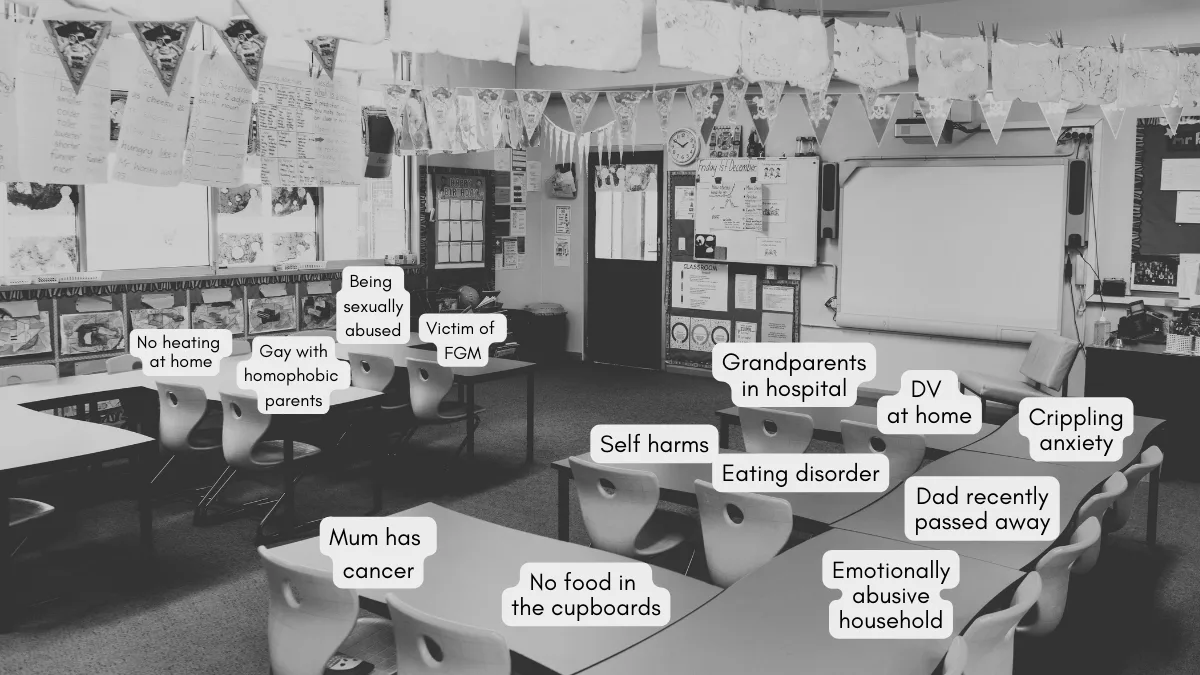
Despite what many people assume, young people don’t act out without a reason. What we call “misbehaviour” is often just unprocessed emotion, unmet needs, or unspoken pain.
I know this because I have worked with children for over fifteen years, but I also know this because of my own lived experience.
As a teen, I was the nightmare student you don’t want in your classroom. I shouted. I screamed. I got out of my seat a lot and tried to run away. I was rude, ungrateful and had a big attitude problem. From year 7 onwards I spent most of my days either truanting, in detentions or in ‘the unit’. I was warned probably every week that I would be excluded if my behaviour didn’t change. At fourteen I was placed on a restricted timetable because teachers refused to have me in their classrooms. At fifteen I was finally excluded and was told not to do my GCSE’s because ‘there’d be no point’.
What school saw and had to deal with was abusive language, huge outbursts, and aggression. What they didn’t see was a child who was traumatized. Outside of school, I was experiencing emotional, physical and sexual abuse. They didn’t see my pain or even try to understand it. This is the experience of so many students across the country who are screaming out for help in the most unloving ways.
“They’re not giving you a hard time. They’re having a hard time.” – Dr. Ross W. Greene
A revolutionary classroom sees the behaviour, but listens for the message underneath. Think of a student in your class who has the most challenging behaviour. What are they trying to say?
Positive behaviour management strategies start first with understanding. Before jumping to conclusions or using default responses in a bid to ‘manage’ the behaviour, try to understand first. This one tip will help you develop an effective behaviour management strategy in your classroom that actually works.
2. Connection Over Correction, Every Time
Students don’t need another reward system. They need safety, trust and connection.
When students feel seen, they stop shouting. When they feel safe, they stop running. When they feel valued, they start responding.
Reconnection is the intervention ALL young people need.
You can build trusting relationships with your students by:
- Getting to know them: What do they like/dislike? How do they spend their time outside of school? What are their interests/personal motivations? What triggers do they have? What helps calm them down? What makes them feel safe?
- Show them that you know them: Mention things in conversation to show them that you know them. Make adjustments based on their interests and needs. A student not engaging? Plan a whole lesson based on their current interests and watch them light up! Positive behaviour management strategies that work focus on equity not equality.
- Praise intentionally: For some students, a win is completing a piece of work, for others, it’s staying sat in their chair for a whole lesson. Celebrate the little wins for every student. This can be as simple as saying something like “I am really proud of you for staying in your seat all lesson Jake. Amazing work!” Remember to be specific and not generic.
- LUV: Use LUV to show your students that their personal opinions and feelings are valid. Listen: Show them that you’re listening to what they are saying. Understand: Try to understand their perspective. Remember how little they are and how small their world is. Validate: Let them know their feelings are valid. This doesn’t mean changing your boundaries or allowing students to do what they want, it’s about acknowledging their feelings. Using LUV sounds like: “I hear you’re feeling frustrated right now because you can’t have extra play. I understand you feel frustrated because you wanted to finish off the football game. I hear you. Your feelings are valid.”
Getting to know each student is essential because meaningful learning begins with meaningful relationships. When educators take the time to understand each child’s background, interests, strengths, and struggles, they create a foundation of trust and safety that encourages risk-taking, curiosity, and resilience.
Knowing your students allows you to personalise support, celebrate their individuality, and respond with empathy—especially when challenges arise. In a connected classroom, students feel seen, valued, and understood, which fuels both academic growth and emotional well-being.
“Students don’t learn from people they don’t like.” — Rita Pierson, educator and TED speaker
3. Regulate Yourself First
Let’s admit it: we’re not always regulated. This job is exhausting. Some days (most days) we’re running on caffeine and adrenaline.
But your nervous system is the classroom climate. If you’re in fight-or-flight mode, your students feel it—even if you’re smiling.
Regulation isn’t calm voices and yoga breathing. It’s honesty. Presence. Self-awareness.
In the heat of a challenging moment, it’s crucial for us to regulate ourselves before responding. Simple strategies like taking a deep breath, pausing for a count of five, or grounding ourselves with a calming phrase can help shift from a reactive to a responsive state.
Practising mindfulness, naming the emotion (“I’m feeling frustrated right now”), and reminding yourself that the student is struggling—not trying to provoke. This can create space for compassion. Having a plan for difficult moments, such as stepping back briefly, using co-regulation tools, or asking for support if needed.
“Understanding and mastering negative, unpleasant emotions gives you an edge when you’re teaching.” – Patricia A. Jennings
4. Scrap the Stickers
We’re done with behaviourist tricks. If reward charts worked, we’d have seen a behaviour revolution by now.
We don’t need more carrots. We need more care.
Instead of:
- “Do X and I’ll give you Y”
Try: - “What’s making this hard right now? What support would help?”
Instead of:
- “Three strikes and you’re out”
Try: - “Let’s figure out what’s going on together.”
Revolutionary classrooms build internal motivation—not dependency on points. This shift begins by building genuine relationships and taking the time to understand what makes each student tick—their interests, goals, fears, and values. When teachers connect learning to what truly matters to each child, motivation becomes personal and powerful. Students are more likely to engage, persist through challenges, and take ownership of their growth when they feel seen, trusted, and inspired. In this kind of environment, motivation doesn’t need to be imposed—it’s cultivated from within.
5. Replace Isolation With Regulation
There’s a strange phenomena that exists in UK schools. When young people are overwhelmed, disregulated or acting out, we send them out.
Corridor. Isolation. Home.
But what is this teaching them? And how is this helping the situation in the long run?
Isolation and exclusion send a powerful and painful message to a child: you don’t belong. Whether it’s being sent out of the classroom, ignored, or separated from peers, these actions can trigger feelings of shame, rejection, and worthlessness.
Instead of teaching accountability or reflection, exclusion often reinforces the very behaviours it aims to correct—because it disconnects the child at the moment they most need connection, support, and understanding. It tells the child that their struggles make them unworthy of community, which can damage trust and hinder emotional and academic development.
True discipline should teach, not punish—and that starts with inclusion, empathy, and maintaining the relationship even when behaviour is difficult.
Every classroom needs a soft place to land. Even a corner with noise-cancelling headphones, fidgets, art materials, a journal. A place to pause—not be punished. Having a safety corner in your classroom where students know they can go when they feel disregulated or overwhelmed is a great way to say: “You belong here. Your emotions are valid and I’m going to help you work through them.” It also empowers young people to recognize their emotions and learn how to regulate them.
Better yet? Ask students what they need when they are feeling disregulated and co-create it.
For older students, holding restorative circles are a great way to build a culture of opening up and self-reflection.
“Our regulation sets the tone for success in our buildings and classrooms.” – Kristin Van Marter Souers
This Is Bigger Than Behaviour
The way we manage challenging behaviour isn’t just about maintaining order—it shapes who our students become. When we rely on punitive or reward-based systems—sticks and carrots—we risk tearing students down, making them feel controlled rather than cared for.
In contrast, positive behaviour management strategies that focus on helping students co-regulate their emotions and feel empowered send a far more powerful message: that they are valued, capable, and part of a community. These approaches build character by teaching students how to understand themselves, make thoughtful choices, and contribute positively—not just comply out of fear or desire for reward. When we choose to build up rather than break down, we nurture lifelong skills that benefit both the individual and the entire classroom culture.
You’re Not Alone
If you’ve ever looked at a policy and thought, “This isn’t helping anyone” — you’re probably right. And you’re not the only one.
Let’s rebuild the way we relate to young people. Not with sticker charts — but with fierce compassion and radical respect.
Try these positive behaviour management strategies in your classroom and see how they help.