
EYFS Emotions Flashcards for Emotional Literacy and Self-Regulation
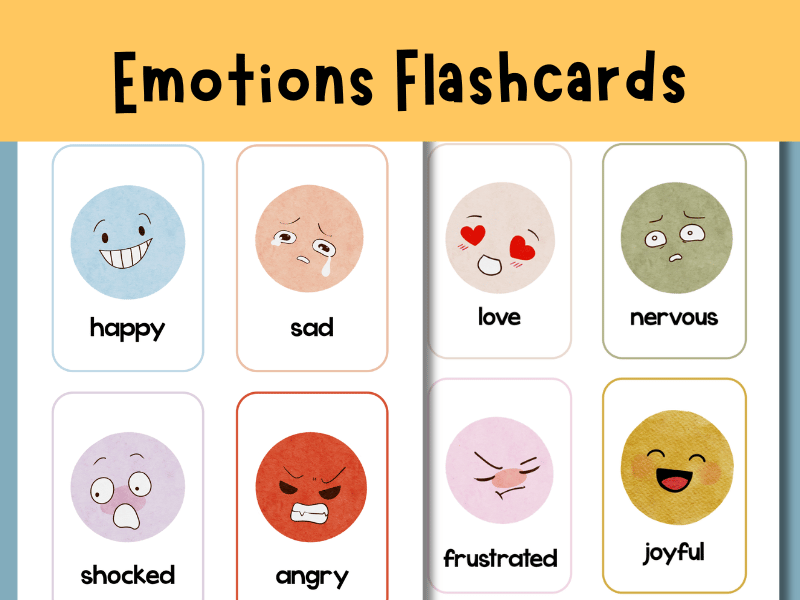
EYFS Emotions Flashcards are a practical and engaging way to help young children build emotional literacy, recognise feelings, and develop early self-regulation skills. This printable set of emotions flashcards includes 16 illustrated feelings cards designed to support children as they learn to identify, name, and talk about a wide range of emotions in an accessible, age-appropriate way.
In the early years, children are still learning how to understand big feelings and communicate what is going on inside. These EYFS Emotions Flashcards make that process easier by pairing clear, child-friendly illustrations with simple emotion words. Rather than focusing only on basic feelings such as happy or sad, these feelings cards introduce children to a broader emotional vocabulary, including emotions such as nervous, proud, bored, excited, frustrated, worried, and calm.
These EYFS Emotions Flashcards are ideal for use in EYFS, PSHE, circle time, calm corners, one-to-one conversations, and daily classroom routines. They can be used to support emotional check-ins at the start of the day, help children reflect after a difficult moment, or encourage meaningful discussion about feelings during wellbeing activities. They are also a helpful visual support for children who may find it harder to explain how they feel using words alone.
Using emotions flashcards regularly can support children’s personal, social, and emotional development by helping them recognise feelings in themselves and others. As children become more confident with emotional vocabulary, they are often better able to express their needs, communicate their experiences, and begin to manage big feelings with greater confidence. This makes EYFS Emotions Flashcards a valuable resource for supporting not only emotional literacy, but also empathy, communication, and positive relationships.
These printable feelings cards are flexible enough to use in a range of early years settings, including nurseries, preschools, Reception classrooms, intervention groups, and home education. They are particularly useful for supporting children during transitions, behaviour reflection, friendship work, and calm corner routines. They can also be used alongside your wider PSHE and wellbeing provision to help create a nurturing environment where children feel safe to talk about emotions.
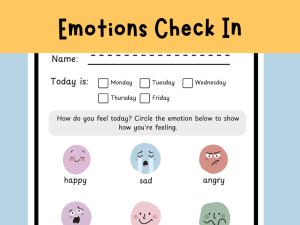
You might use these EYFS Emotions Flashcards during a morning check-in, as part of a circle time discussion, alongside a story about feelings, or during one-to-one support sessions. They also pair well with other emotional wellbeing resources, such as the Daily Emotions Check-In, helping you build a consistent and supportive approach to emotional awareness and regulation across your setting.
Why Choose EYFS Emotions Flashcards?
These EYFS Emotions Flashcards are designed to be simple, effective, and easy to use. They help children:
- identify and name a wide range of feelings
- build emotional literacy and vocabulary
- develop confidence in emotional expression
- strengthen early self-regulation skills
- support reflection, empathy, and communication
- enhance PSHE and emotional wellbeing activities
What’s Included in EYFS Emotions Flashcards?
✅ 16 printable EYFS Emotions Flashcards
✅ 4 A4 PDF pages
✅ Child-friendly illustrations for each emotion
✅ Clear emotion word labels for vocabulary building
✅ Print-and-go format
✅ No prep required
Perfect For
- EYFS and Reception teachers
- nursery and preschool settings
- childminders and home educators
- SEN and EAL support
- emotional literacy and wellbeing activities
- calm corners and regulation spaces
- PSHE lessons and daily check-ins
If you are looking for a simple, visual, and meaningful way to support children with feelings recognition, emotional expression, and self-regulation, these EYFS Emotions Flashcards are a valuable addition to your early years toolkit. Designed to help little learners understand emotions in a supportive and accessible way, these printable emotions flashcards make it easier to build emotional awareness every day.
Supporting children to recognise and name emotions is a key part of early personal, social and emotional development, as reflected in official early years guidance.


Reviews
There are no reviews yet.