

So, you’ve done it! You’ve sent off the deregistration letter and your child is officially home educating. Maybe you feel relieved. Maybe you feel terrified. Maybe you feel like you’ve just jumped out of a plane and you’re frantically searching the parachute. And honestly? That’s completely normal.
When you first deregister your child from school, there can be this weird feeling of a sense of freedom, panic, guilt, excitement, doubt and “oh my goodness, what have I done?” all rolled into one. One minute you’re fantasizing about slow mornings, cosy learning, library trips and your child finally being able to breathe again. The next minute you’re spiralling because they’ve spent three hours watching YouTube and you’re wondering whether the local authority is going to appear at your door with a clipboard and a face of pure dissapointment.
Take a breath. You don’t need to recreate school at your kitchen table. In fact, I would gently suggest that you don’t.
As a home educating parent myself, and as someone who has worked in education for over 15 years, I truly believe the first stage of home education is not about rushing into timetables, workbooks, subjects and curriculum plans. The first stage is about settling in. It’s about helping your child come back to themselves and you finding your feet.
First Things First: You Don’t Need to Recreate School
Home education does not have to look like school, and you don’t need to follow the National Curriculum. You do need to provide an education that is suitable for your child’s age, ability, aptitude and needs, but that doesn’t mean six hours at a desk or a full timetable from day one.
This doesn’t mean sitting at the kitchen table from 9 until 3 or forcing maths before anyone has emotionally recovered. For now, your job is not to have everything perfectly planned. Your job is to let the dust settle.
This is especially true if your child has come out of school because of anxiety, bullying, unmet needs, burnout, masking, school refusal, trauma, sensory overload, friendship issues, or simply because school was no longer the right fit. A child who has been surviving school may not be ready to joyfully leap into fractions and fronted adverbials just because they are now at home.
They might need to sleep longer. They might need to play more. They might need to be quiet and have some processing time. Or, they might even need to be angry for a bit. They might need to say, “I hate learning,” even though what they really mean is, “I hated how learning felt when I was under pressure.”
That does not mean home education is failing. It may mean your child is finally safe enough to let go and express how they really feel for the first time.
This Is Where Deschooling Comes In
The first stage after deregistering is often referred to as “deschooling” in the home-ed community. Put simply, deschooling is the transition between school and home education. It is the time where your child begins to step away from school pressure, school routines and school-based ideas about what learning “should” look like.
It is also a time for you to unlearn a few things too, because most of us were trained by school to believe learning only counts if it looks like sitting still, writing things down and ticking boxes.
Deschooling is not doing nothing. It is creating the conditions where real learning can begin again.
I’ve written a fuller guide to deschooling here: What Is Deschooling? A Simple Guide for Home Educating Families. But for this blog, the main thing I want you to know is this: in the first 30 days, your focus does not need to be curriculum. It needs to be settling.
And that is where the three R’s come in.
The First 30 Days: Focus on the Three R’s
In The Home Education Starter Pack: Guide One — Settling In, I focus on what I call the three R’s: Resetting, Reconnecting and Rediscovering. These are the foundations I wish every new home educating family had the knowledge to start with.
Not “buy 47 workbooks.” Not “pick a curriculum by Friday.” Not “panic because your child refuses to write.” Just these three gentle, powerful foundations.
Resetting: Let Your Child Breathe

Resetting means giving your child space to breathe after being in the school system. It might look like slower mornings, more sleep, less pressure, more time outside, more play, more quiet and fewer demands.
Resetting says: You are safe. You do not have to perform today. Things are different now.
And honestly, for some children, that message is the first real lesson of home education.
Because school can leave children in a constant state of stress, especially if they have been masking, trying to fit in, struggling with unmet needs, coping with bullying, navigating sensory overload or feeling like they are always behind. So when they first come home, their nervous system may still be acting like they are in school.
They might be defensive. They might resist anything that looks like learning. They might test whether home is really different. They might be exhausted. They might seem “fine” one minute and completely overwhelmed the next.
This doesn’t mean you made the wrong choice and it doesn’t mean you need to immediately introduce stricter routines or prove that home education is “working.” It means your child is adjusting, and that’s okay.
Resetting might look like letting them sleep in for a while, spending time outside with no agenda, having cosy mornings instead of rushed ones, saying yes to play, movement, snacks and rest, lowering demands while you rebuild trust, watching films and documentaries together, going for walks, letting them choose what they want to do, and creating rhythm rather than rigid routine.
And before your panic brain says, “But what about maths?” I promise, maths is not going anywhere. The times tables will survive a few weeks of your child remembering how to feel human.
Reconnecting: Rebuild the Relationship
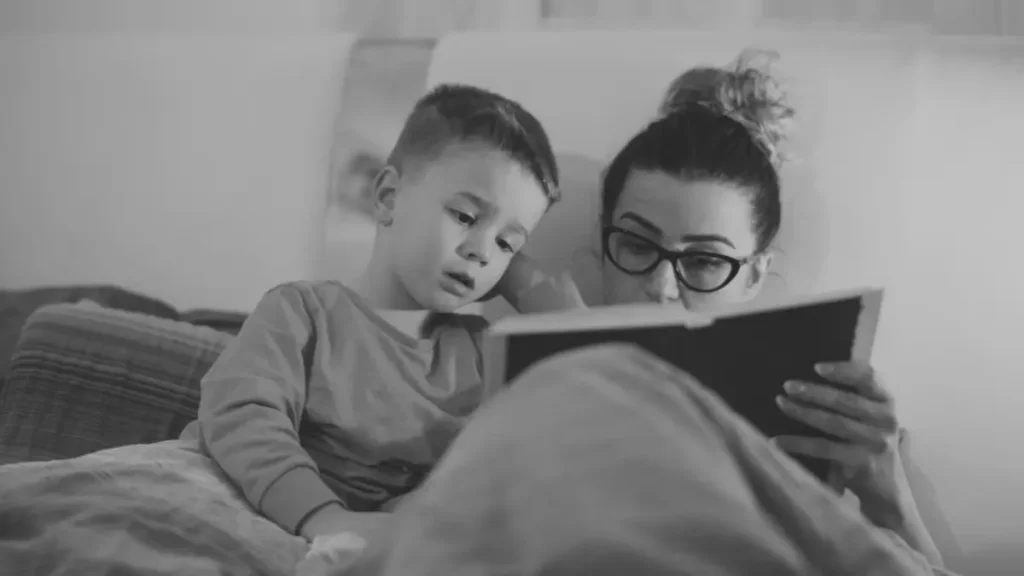
Reconnecting means rebuilding the relationship between you and your child, your child and learning, your child and home, and your child and themselves. It is about helping your child feel known, accepted and valued beyond school outcomes.
Reconnecting says: You matter as a whole person, not just as a student.
This part is so important because sometimes, perhaps without meaning to, school makes learning feel like performance. Children start to believe they are “good” or “bad” at learning. They compare themselves. They internalise labels. They become the “quiet one,” the “disruptive one,” the “behind one,” the “gifted one,” the “sensitive one,” the “lazy one,” the one who is just “too much.”
Home education gives you the chance to gently peel those labels off.
Your child is not a grade, a reading age, an attendance percentage or a behaviour point. They are a whole person. And one of the most powerful things you can do in the early days is simply enjoy them again. Not as a project. Not as a student. But as your unique and beautiful child.
Reconnecting might look like playing games together, cooking their favourite food, going somewhere they love, listening without trying to fix, letting them talk about school if they want to, letting them not talk about school if they don’t, laughing together, reading aloud, building Lego, watching their favourite show and actually getting interested in it, or simply saying, “I’m glad I get this time with you.”
Before we rush into formal learning, we need connection; children learn best when they feel safe, seen and valued, just like adults.
Rediscovering: Notice What Lights Them Up
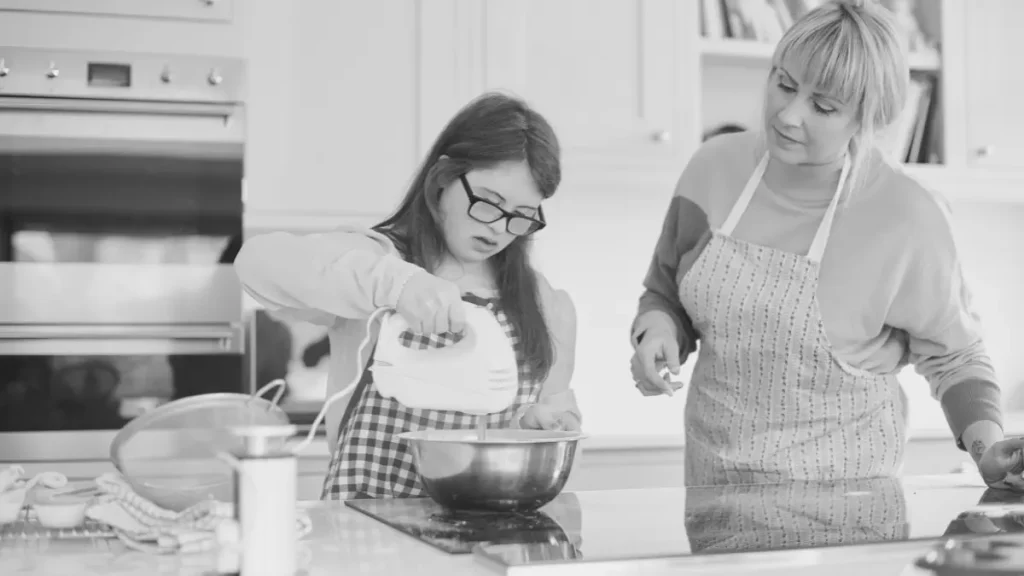
Rediscovering means gently noticing what your child is naturally drawn to when pressure is removed. It is about curiosity coming back online. It is about realising that learning can be fun again.
Rediscovering says: Learning belongs to you.
This is the bit where you start to notice the clues. What do they choose when nobody is forcing them? What do they talk about? What do they ask questions about? What do they watch, build, draw, research, collect, make, imagine, repeat or obsess over?
That is not “wasted time.” That is data. Beautiful, human, curiosity-led data.
A child who spends hours building dens might be exploring design, engineering, problem-solving, spatial reasoning and imaginative play. A child who wants to bake every day might be learning measurement, sequencing, chemistry, independence and resilience. A child who collects leaves, stones or shells might be building skills in observation, classification, pattern-spotting and natural science. A child who draws characters all day might be developing storytelling, fine motor skills, visual literacy and emotional expression.
This is where home education starts to feel less like “How do I force school into my house?” and more like “How does my child naturally learn?”
That shift changes everything.
But What Should We Actually Do All Day?
This is usually the question underneath everything. Because “deschooling” sounds lovely until it is 11:14am on a Tuesday, everyone has had cereal, the novelty has worn off, and you’re wondering whether you’re supposed to be doing phonics, forest school, Latin or interpretive dance.
So let’s keep it simple. In the first 30 days, you could aim for a gentle rhythm rather than a strict timetable.
Your morning might involve a slow start, breakfast, a chat, reading aloud, a walk, a game or a creative activity. The middle of the day might include an outing, a project, baking, a documentary, nature time, the library, a home ed group or an interest-led activity. The afternoon might be quieter, with play, screen time, an audiobook, crafts, movement, chores or free time. The evening might be family time, stories, reflection or planning tomorrow together.
If having a little bit of structure helps you feel calmer, you might find it useful to have some gentle prompts for the first few weeks. In The Home Education Starter Pack: Guide One — Settling In, I’ve included a 30 Days of Deschooling Challenge with simple ideas for how to spend your days while your child settles. Nothing intense, nothing school-at-home-ish — just small prompts to help you reset, reconnect and begin noticing what feels right for your family.
You can also start keeping very simple notes. Not formal evidence folders. Not colour-coded reports. Just little observations. For example: “Today we baked banana bread. Lots of measuring, reading instructions and problem-solving.” Or, “Watched a documentary about volcanoes and talked about Pompeii.” Or, “Spent two hours building a Lego city and explaining the transport system.” Or, “Went to the woods and identified mushrooms, leaves and animal tracks.”
This helps you start seeing the learning that is already happening. And it will reassure you on the wobbly days that you’re doing enough.
What About the Local Authority?
At some point, your local authority may contact you to ask about the education you are providing. This is normal, and it does not mean you are in trouble.
Please do not let a letter from the local authority send you into panic mode. You do not have to have a perfect curriculum mapped out from day one. You do not have to make your home look like a classroom. You do not have to prove that your child is doing the exact same work they would have done in school.
What you do need, over time, is to be able to explain how your child is receiving an education suitable to their age, ability, aptitude and needs. And in the early days, it is completely reasonable to say that your child is settling in, deschooling, rebuilding confidence, reconnecting with learning and gradually developing a home education rhythm. Our Settling In guide gives more details on how to communicate ‘deschooling’ to your local authority.
Please Don’t Compare Your Beginning to Someone Else’s Year Five
One of the hardest things at the start of home education is comparison. You join a Facebook group and suddenly everyone else seems to be doing forest school, GCSE Latin, sourdough, pottery, wild swimming, Shakespeare, coding and raising emotionally fluent children who voluntarily journal at sunrise.
Meanwhile, your child is in pyjamas at 1pm eating toast and watching someone build a theme park in Roblox.
I say this with my whole chest: do not panic.
You are seeing tiny windows into other people’s lives. You are not seeing the meltdowns, the doubts, the messy kitchens, the abandoned curriculums, the days that didn’t work, the parent crying in the car outside the library because they thought home education would feel easier by now.
Every family has to find their own rhythm. Your home education does not need to look like anyone else’s. It needs to work for your child, your family, your values and your real actual life. Not your fantasy life. Not Pinterest’s life. Your life.
So When Do We Start “Proper Learning”?
Here is my honest answer: you already have.
But I know what people mean when they ask this. They mean: when do we start maths, English, science, history, structured work, projects or formal lessons? And the answer is gradually.
After a period of resetting, reconnecting and rediscovering, you will usually start to see little openings. Your child asks a question. They get interested in something. They tolerate a short activity. They want to know how something works. They agree to read together. They ask to go somewhere. They become less resistant. They begin to trust that learning at home does not have to feel like school.
That is when you can start gently building. Not by suddenly announcing, “Right, deschooling is over, here is your worksheet.” Please don’t do that unless you want to see a child spiritually leave their body.
Start small. One read-aloud. One maths game. One nature walk. One project. One documentary and a chat. One notebook they actually like. One question followed properly. One interest explored deeply.
Want Support With the First 30 Days?
If you’ are’re sitting there thinking, “Yes, this sounds lovely, but I still need someone to actually tell me what to do,” I’ve got just the thing.
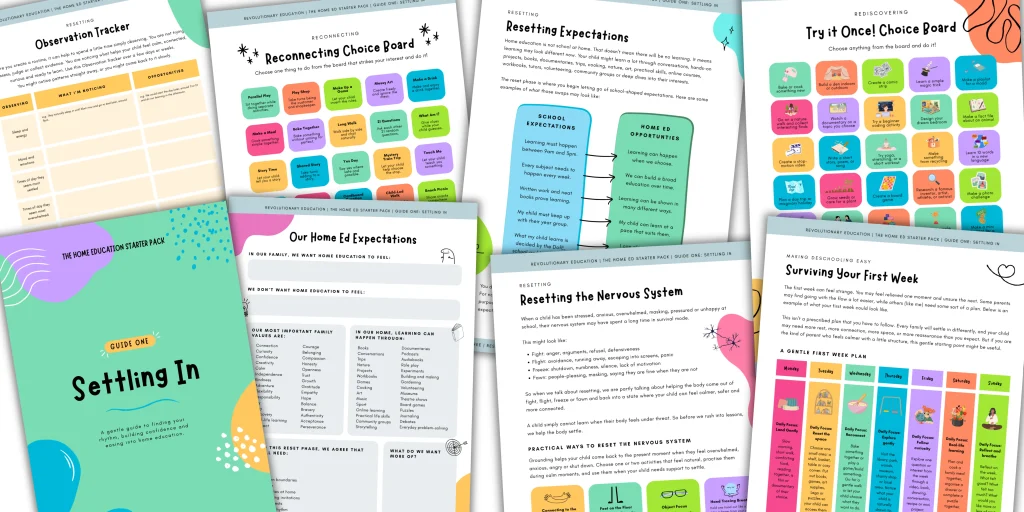
The Home Education Starter Pack: Guide One — Settling In is designed for families who have just deregistered, or are right at the beginning of their home-ed journey, and need calm, practical, reassuring guidance for the first 30 days.
Inside, we focus on the three R’s: Resetting, Reconnecting and Rediscovering. Resetting helps your child feel safe, rested and free from school pressure. Reconnecting helps rebuild your relationship with your child, learning and home. Rediscovering helps you gently notice your child’s interests, curiosity and natural ways of learning.
The pack includes practical deschooling strategies, resetting challenges, reflective prompts, games and activity ideas for each of the three R’s, and supportive guidance to help you navigate the early days without spiralling into panic-planning mode.
It is not about doing home education “perfectly.” It is about helping you and your child settle in with confidence, connection and compassion. Get Guide here.
Final Thoughts: You Do Not Have to Have It All Figured Out
If you have just deregistered your child from school and you are wondering what on earth happens next, please hear this: you are allowed to go slowly.
You are allowed to rest. You are allowed to change your mind about methods, resources and routines. You are allowed to not know everything yet. You are allowed to learn alongside your child.
You do not need to become a school. You are building something different. Something more flexible. More human. More responsive. Something that starts with your actual child, not a system’s idea of who your child should be.
So for now? Make a cup of tea. Let them breathe. Let yourself breathe too. Start with resetting, reconnecting and rediscovering. The rest can grow from there.