

Abstract
This paper examines the persistent industrial foundations of mainstream education in the United Kingdom, arguing that despite vast technological and societal change, schooling remains structurally and philosophically anchored in nineteenth-century principles. Drawing on historical, psychological, and sociological research, it explores how systemic, cultural, and political forces have sustained an outdated model built on standardisation, compliance, and control. The analysis reframes students not as products of education, but as consumers of learning — active participants whose needs and desires must drive the design of future systems. Using evidence from neuroscience, learning theory, and international case studies, the paper highlights how human-centred design can transform schools into environments that prioritise wellbeing, agency, and purpose. It concludes that true reform requires abandoning the industrial metaphor entirely: education must evolve from a system that produces order to one that cultivates flourishing, empathy, and curiosity in a rapidly changing world.
1. Introduction: The Paradox of Progress

Despite unprecedented technological, economic, and social transformation since the Industrial Revolution, mainstream schooling in the UK remains structurally and philosophically anchored in nineteenth-century principles — a system that continues to prize conformity, standardisation, and control over creativity, autonomy, and adaptability. This inertia reflects deep-rooted systemic, cultural, and political forces rather than a lack of innovation or understanding.
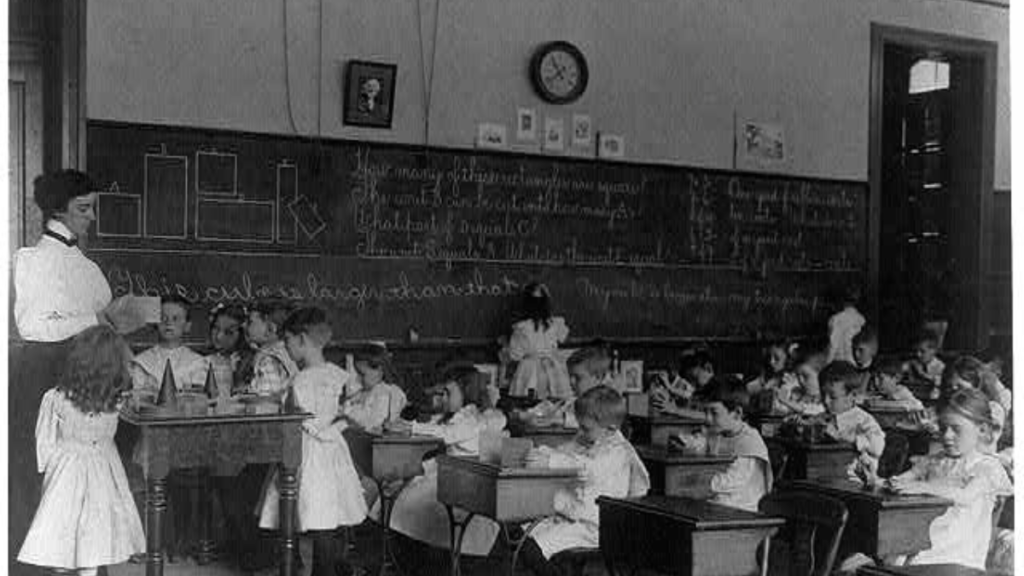
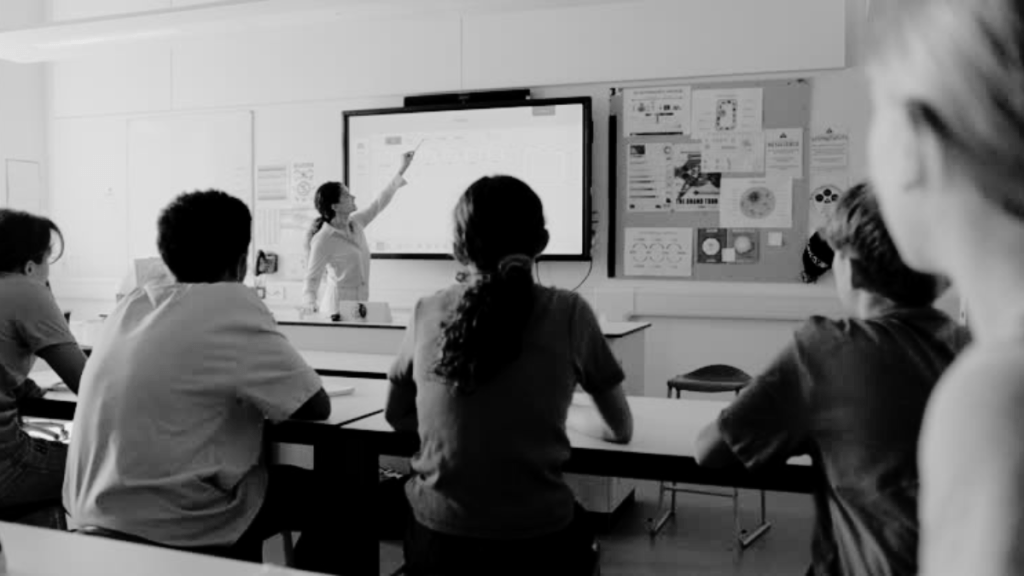
A classroom vistor today would encounter a structure remarkably similar to its nineteenth-century predecessor. Strip away the smartboards and colourful displays, and the same rows of desks face a single teacher. Lessons are divided into rigid subjects and timed by the bell; students are grouped by age, expected to remain quiet, and evaluated through standardised tests. Although corporal punishment is obsolete, the underlying logic of obedience endures — replaced by systems of ‘sticks and carrots’ that reinforce compliance over autonomy.
This continuity stands in stark contrast to almost every other domain of human life. Since the early 1800s, society has witnessed industrialisation, electrification, globalisation, and the digital revolution. Medicine has advanced from bloodletting to biotechnology; transport from horse-drawn carriages to autonomous vehicles; and communication from handwritten letters to instantaneous global connection. Yet, as Sir Ken Robinson (2006) observed, schools “still educate children by batches,” designed for the Industrial Age rather than the creative, interconnected world of today.
Educational scholar Gert Biesta (2015) argues that the purpose of education must extend beyond qualification and socialisation to include subjectification — the cultivation of autonomous and responsible individuals. Valerie Hannon (2021) expands this vision through the concept of flourishing, positioning education as the design of environments in which both people and the planet can thrive. Yong Zhao (2012), meanwhile, calls for entrepreneurial learners — adaptable, creative agents capable of shaping their own futures. Yet, as Tyack and Cuban (1995) observed, educational reforms have merely “tinkered toward utopia,” altering appearances without transforming schooling’s underlying grammar.
2. Industrial Origins: The Birth of the Modern School
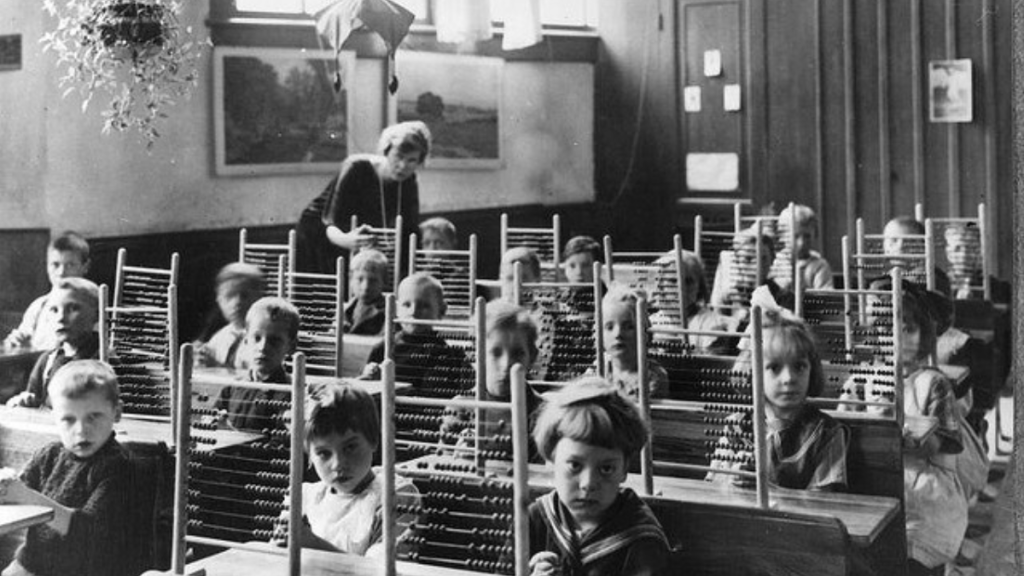
The origins of modern schooling can be traced to the social and political upheavals of the Industrial Revolution. As factories transformed economies across Europe and North America in the eighteenth and nineteenth centuries, governments began to see education not only as a path to enlightenment, but as a mechanism for producing disciplined, literate, and obedient citizens. The classroom — with its timetables, hierarchies, and linear progression of lessons — mirrored the industrial systems it served.
The intellectual roots of this model can be found in early nineteenth-century Prussia. In the aftermath of Napoleon’s invasion, German philosopher Johann Gottlieb Fichte argued that the nation’s survival depended on reshaping its citizens through state-controlled education. In his Addresses to the German Nation (1808), he called for a system that would “fashion the individual so that he cannot will otherwise than what you wish him to will.” Fichte’s vision sought moral unity through state-controlled schooling — a system designed to cultivate conformity for national cohesion. In this model, students were not seen as individual learners with diverse needs, but as the products of a national project — shaped, standardised, and disciplined to serve the collective good.
When Horace Mann visited Prussia in 1843, he was captivated by what he described as its “orderly, punctual, and obedient” students, and sought to replicate the system in Massachusetts. The model soon spread throughout the United States, Europe and eventually the United Kingdom, becoming the blueprint for mass education in the modern world (Bowles & Gintis, 1976).
Other nations followed similar trajectories. In Meiji Japan, for instance, education was restructured to create loyal, industrious citizens who would serve the new industrial state — reflecting the same fusion of moral instruction and labour discipline found in Prussia. Across contexts, schooling became a tool for social order as much as intellectual development, its efficiency echoing the rhythm of the machine age.
While progressive thinkers like John Dewey (1916) later argued for a more democratic and experiential form of education, his vision was largely overshadowed by the industrial ideal of standardisation, not because it served learning, but because it served order.
As the OECD (2023) notes, many features of this 19th-century design still define schooling today, even as societies have transitioned to knowledge and innovation economies. The logic of industrialism persists in the assumptions that learning must be time-bound, teacher-led, and centrally assessed. In Biesta’s (2015) terms, such systems prioritise qualification — the efficient transmission of knowledge — over subjectification, the nurturing of agency and purpose. Meanwhile, as Zhao (2012) reminds us, the global economy now requires entrepreneurial learners, not compliant workers. Yet education’s core design remains shaped by its industrial birth.
By the early twentieth century, mass schooling had become both a triumph and a trap: a universal system that expanded literacy while entrenching conformity. The Prussian ideal of shaping the will for the good of the state persisted beneath the rhetoric of equality and opportunity, leaving a legacy that continues to define education’s structures more than two centuries later.
3. The World Transformed: 19th–21st Century Progress
Over the past two hundred years, most sectors have experienced revolutions so huge that they are scarcely recognisable from their origins. In medicine, leeches and mercury treatments have given way to vaccines, antibiotics, organ transplants, and AI-assisted diagnostics. Communication has leapt from the telegraph to the smartphone, collapsing time and distance into near-instant global connection. Transportation has advanced from horse-drawn carriages to high-speed rail, electric vehicles, and commercial spaceflight. Work itself has transformed from repetitive factory labour to knowledge economies and remote digital collaboration. Even domestic life has changed beyond recognition: electricity, sanitation, and smart phones have fundamentally altered how humans live and interact.
Education, by contrast, has seen far more continuity than change. While new technologies have been periodically introduced — radio lessons, television broadcasts, interactive whiteboards, tablets — they are typically absorbed into existing pedagogical models rather than transforming them. As the OECD (2023) notes, a digital-education transition is underway, but many systems lack the coherence, governance and design to turn transition into transformation. Technology in schools often serves to “reproduce rather than disrupt” traditional classroom hierarchies (OECD).
Part of the reason lies in education’s dual identity: it is both a personal and a public institution, entangled with politics, culture, and ideology. Whereas other industries respond to market pressures, innovation incentives, and user-demands, schooling often responds to social anxieties — about morality, equality, and control. Attempts at reform have therefore tended to preserve rather than challenge its core structure. As Tyack and Cuban (1995) put it, “The grammar of schooling has been remarkably stable.” Timetables, age-grouping, subject divisions, and teacher-centred instruction persist because they serve bureaucratic order, not because they reflect contemporary learning science.
In an age of artificial intelligence, global interconnectivity, and ecological crisis, this mismatch between education’s form and the world it serves has never been more apparent. We live in a world transformed by innovation — except, it seems, in the very institutions meant to prepare us for it.
4. Superficial Change: Technology Without Transformation
Most individuals today carry a touchscreen device in their pockets — a remarkable evolution from the brick-like mobile phones of the 1990s. The actions of touching, swiping, and scrolling have become almost instinctive, but this design was not a coincidence. Touchscreen technology was deliberately designed around a fundamental human inclination for tactile interaction and immediate feedback. Research in human–computer interaction demonstrates that “touch provides a sense of control, realism, and emotional engagement” (Krishna, 2024). Designers recognised that users seek more than speed or efficiency; they seek responsiveness and sensory affirmation. Consequently, the touchscreen satisfies both a functional need for seamless interaction and a psychological desire for tangible engagement.
This sensitivity to both needs and desires explains why most industries evolve so rapidly. Consumer products are relentlessly tested against human behaviour: companies observe how people think, feel, and act, then adapt accordingly. Design psychology tells us that successful products appeal to more than utility — they trigger pleasure, trust, and identity (Ramzan, 2021). A detergent must remove stains (need), but it also must look and smell clean (desire).
Unlike education, most industries design around the human — the consumer — by identifying and responding to their needs, wants, and desires. For schooling to be truly effective, it must make the same shift: from treating students as products to viewing them as consumers of learning. In the former model, learners are standardised and measured like manufactured goods; in the latter, their needs, motivations, and conditions for growth become the starting point of design.
Many students in the UK arrive at school each day with their basic physiological or emotional needs unmet, which significantly hinders their capacity to learn. Food insecurity alone affects millions of children: recent data from The Food Foundation (2024) show that approximately 2.7 million children live in households experiencing food insecurity, while the UK Government’s Food Security Report (2024) found that 18% of households with children struggle to access sufficient, nutritious food. Similarly, research by the Joseph Rowntree Foundation (2024) revealed that, on average, 35% of primary pupils have come to school hungry at least once during the year — a figure rising to 44% in schools serving more deprived communities.
Beyond hunger, many young people face emotional insecurity and trauma that further impede concentration and engagement, particularly those living in poverty, unstable housing, or care-experienced settings. These statistics underscore a stark reality: before students can meaningfully engage in learning, schools must first address the unmet human needs that undermine their wellbeing and cognitive development. Until a child’s needs for safety, belonging, and self-worth are met, higher-order cognition cannot flourish. Research in educational neuroscience confirms this: stress and deprivation suppress memory formation and executive function (Immordino-Yang & Damasio, 2007; Darling-Hammond et al., 2021).
Above and beyond meeting basic needs, human flourishing depends on curiosity, autonomy, movement, and creative expression — yet these too are systematically neglected. The architecture of schooling restricts movement; timetables and curricula account for every minute; curiosity is constrained by the demand for measurable outcomes, and opportunities for genuine creative exploration are scarce. While designers in nearly every other field ask, “What will delight the user?”, education continues to ask, “What will control the student?”
Learning sciences offer compelling evidence that humans learn best when they experience agency, relevance, and sensory engagement. Studies of embodied cognition show that movement and tactile interaction enhance understanding (Wilson, 2002; Tokuhama-Espinosa, 2020). Motivation theory continues to affirm that autonomy and purpose drive persistence (Deci & Ryan, 2017). Classrooms that integrate choice, collaboration, and physical engagement consistently outperform traditional lecture models in both comprehension and retention (OECD, 2022).
Despite this evidence, the modern classroom remains the antithesis of human design. Other industries could not survive such disregard for user psychology. Companies that ignored feedback would collapse; products that denied sensory or emotional satisfaction would fail to sell. Schools, insulated from these feedback loops, continue to refine systems that feel unnatural to the very people they serve.
To truly evolve, education must become a field of human-centred design. Until it learns to respond not only to human needs but also to human desires — to the biological, emotional, and creative conditions that make learning joyful — it will remain a system optimised for control, not curiosity.
5. Why Schools Resist Change
If every other major industry has reinvented itself in response to human behaviour, why has schooling remained so resistant to evolution? The answer lies not in a lack of innovation but in the power of the systems that preserve the status quo. Schools have become self-sustaining institutions — built, funded, and evaluated according to logics that reward conformity rather than creativity. Four interlocking forms of inertia keep this machinery turning: structural, cultural, political-economic, and psychological.
Structural inertia: the architecture of standardisation
Education systems are arguably among the most bureaucratic institutions in existence. Each element reinforces the next: curriculum dictates assessment; assessment dictates teaching; teaching dictates scheduling; scheduling dictates buildings. Even when reforms are introduced, they are typically absorbed into the existing grammar rather than replacing it.
These structures are upheld by accountability systems that anchor schools to measurable outcomes. League tables, inspection frameworks, and national testing regimes make radical experimentation risky. Teachers, already stretched by administrative and pastoral demands, rarely have the time or autonomy to dismantle inherited norms. The industrial model persists not because educators prefer it, but because they are constrained within architectures designed for predictability and control.
Cultural inertia: tradition and collective memory
Schools are cultural institutions as much as educational ones. Generations of parents, policymakers, and even teachers carry deeply ingrained ideas of what “real school” looks like — desks in rows, homework, uniforms, and authority. Educational historian Larry Cuban (2013) notes that public expectations, not pedagogical research, often determine which innovations survive. Reforms that look too unfamiliar are dismissed as chaotic or unserious.
This cultural dormancy is amplified by nostalgia. Adults who endured traditional schooling may recall it as orderly or morally sound, regardless of whether it was effective. Sociologist Pierre Bourdieu (1977) described this as habitus: the internalised social script that shapes what feels natural. In education, the habitus of schooling normalises hierarchy, competition, and compliance. Innovations that challenge these assumptions — such as self-directed education or ungraded assessment — can provoke discomfort precisely because they disrupt a shared cultural story.
Political and economic inertia: education as social reproduction
Schools also serve economic and political functions that depend on stability. As Bowles and Gintis (1976) argued, mass schooling evolved to reproduce social hierarchies and supply a compliant workforce. Standardisation ensures that large populations can be credentialed and sorted efficiently. Policymakers therefore have incentives to maintain predictability rather than permit disruption.
Moreover, education is politically visible. Changes to curriculum or assessment invite public scrutiny and can cost votes. Short election cycles favour incremental reform over systemic redesign. Even well-intentioned initiatives are often instrumentalised for political gain — framed as “raising standards” or “restoring discipline.” At the economic level, schooling supports entire ecosystems of vested interests: examination boards, textbook publishers, EdTech firms, and bureaucratic agencies. As Robinson (2015) observed, “The problem is not that schools resist reform, but that the system they inhabit rewards staying the same.”
Recent analyses echo this view. UNESCO’s Reimagining Our Futures Together (2021) argues that schooling remains dominated by “industrial habits of measurement and accountability” that stifle transformation. Similarly, Schleicher (2023) finds that while nations invest heavily in EdTech, few reform governance or pedagogy to match technological potential.
Psychological inertia: fear, identity, and the comfort of control
Classrooms are human spaces governed by emotion as much as policy. Teachers’ professional identities have been shaped by centuries of top-down control. Authority is often equated with legitimacy; relinquishing it can feel like losing expertise. Neuroscience also helps explain this resistance: uncertainty triggers anxiety, and predictable routines reduce cognitive load (Immordino-Yang & Damasio, 2007). In this sense, rigidity can offer psychological safety for both teachers and students.
Parents, too, seek security through familiarity. In times of economic or social instability, traditional schooling can feel like an anchor — a place where the rules are known. Radical change therefore provokes existential fear: if schools look different, what becomes of childhood, success, and social mobility? These emotions, more than evidence, often dictate the pace of policy change.
Acknowledging the value of schools
It is equally important to recognise that not all elements of traditional schooling are obsolete. Standardisation has helped ensure equity and accountability, particularly in societies where education once served only elites. Shared curricula and assessments can protect against bias and guarantee a common literacy for all citizens. Moreover, schools provide safety, structure, and belonging for many children who lack stability elsewhere. The challenge is therefore not to dismantle structure, but to humanise it — to preserve the best of order and equity while discarding the parts that suppress curiosity and autonomy.
6. Seeds of Change: Pockets of Innovation
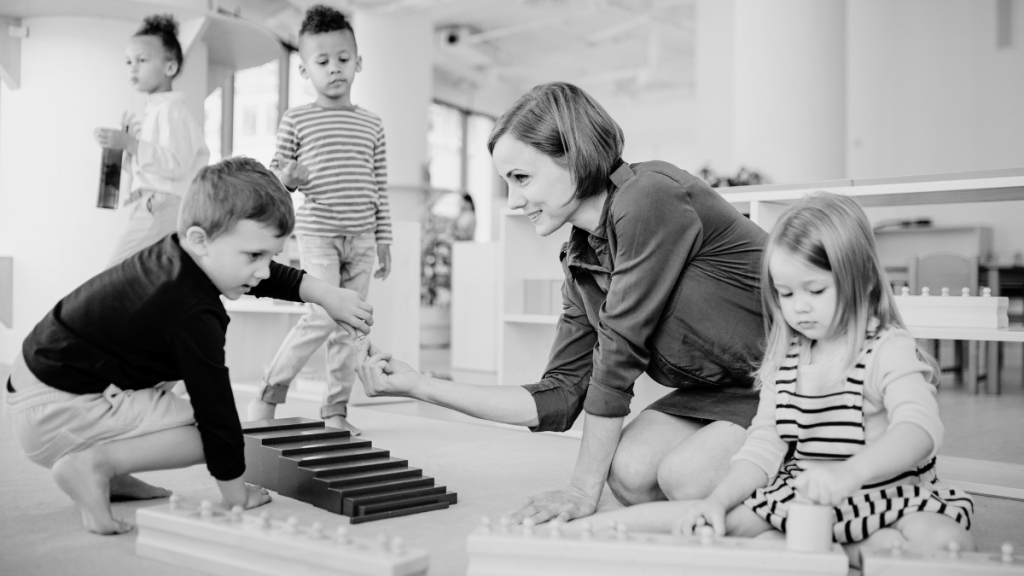
Despite the weight of history, the story of schooling is not one of total stagnation. Across the world, educators, communities, and entire nations are re-imagining what learning can be when designed around human flourishing rather than institutional compliance. These initiatives — sometimes local and fragile, sometimes system-wide — prove that education can evolve when treated as a living ecosystem instead of a factory line.
Trust over control: The Finnish model
Finland remains one of the most cited examples of human-centred reform. Since the 1970s, it has gradually dismantled high-stakes testing, league tables, and school inspections in favour of trust in teachers and holistic learning. Teachers are highly trained and granted professional autonomy; students experience less homework, more play, and curricula built around wellbeing, creativity, and collaboration (Sahlberg, 2011; OECD, 2022).
The results have been consistent: Finnish students perform strongly on international assessments while reporting higher life satisfaction and lower stress. As Valerie Hannon (2021) notes, Finland’s success lies not merely in pedagogy but in purpose — a commitment to education as the design of flourishing lives. It represents a system built on confidence rather than control.
Designing for innovation and resilience: Singapore
Singapore’s transformation since the early 2000s provides a striking contrast. Recognising the limits of rote learning, the Ministry of Education launched the Teach Less, Learn More initiative to promote creativity, metacognition, and social-emotional competence. This reform, supported by sustained teacher development and data-driven evaluation, has repositioned the city-state as a global hub of educational innovation.
Singaporean students now lead in mathematics and science yet also report higher engagement and self-efficacy (OECD, 2023). The government continues to invest in “future-ready learning ecosystems” that blend technology, entrepreneurship, and sustainability education (Ng, 2022). As Zhao (2012) might frame it, Singapore aims to cultivate entrepreneurial learners — adaptable, self-directed individuals prepared for uncertainty.
Wellbeing as purpose: Bhutan’s Gross National Happiness curriculum
In Bhutan, reform has taken a radically humanistic path. Grounded in the national philosophy of Gross National Happiness (GNH), the Royal Education Council redesigned the curriculum to measure success through wellbeing, environmental stewardship, and compassion rather than economic output (Royal Education Council, 2020). Students participate in mindfulness, ecological projects, and community service alongside academics.
This model aligns closely with Biesta’s (2015) argument that education’s ultimate purpose is subjectification — helping learners become autonomous, ethical beings. Bhutan demonstrates that when a nation defines educational success through collective happiness rather than GDP, policy and pedagogy align naturally with human development.
Equity through technology: Uruguay’s Plan Ceibal
Uruguay’s Plan Ceibal, launched in 2007 and continually updated, illustrates how technology can advance equity rather than deepen divides. Every student receives a laptop or tablet, supported by national Wi-Fi infrastructure and open digital resources. The initiative began as a response to inequality but has evolved into a platform for innovation, remote learning, and teacher collaboration (UNESCO, 2021).
During the COVID-19 pandemic, Uruguay was among the few countries able to maintain full national learning continuity online — not because of technology alone, but because of a culture of inclusion and trust built over a decade. Plan Ceibal embodies the principle that digital tools must serve human goals, not the reverse.
Micro-level movements: Montessori, Reggio Emilia, and self-directed learning
At the micro level, long-standing alternative pedagogies such as Montessori, Reggio Emilia, and Waldorf/Steiner continue to offer evidence of human-centred design. These environments prioritise sensory experience, autonomy, and intrinsic motivation; materials are tactile and open-ended, and adults act as facilitators rather than directors. Neuroscience supports these principles: movement, play, and self-direction enhance executive function and long-term learning (Diamond & Ling, 2016; Tokuhama-Espinosa, 2020).
Emerging communities such as Agile Learning Centres and the Self-Directed Education (SDE) movement are building on these traditions. Studies show that graduates of SDE settings exhibit strong problem-solving, empathy, and adaptability — precisely the traits demanded by modern economies (Gray, 2013; OECD, 2022).
The common thread
Across these diverse models, a clear pattern emerges. Each:
- Begins with a philosophy of trust and autonomy.
- Prioritises relationships and wellbeing over measurement.
- Treats teachers as designers of learning, not mere deliverers of curriculum.
- Aligns with what cognitive science and motivation theory confirm about how humans thrive.
As Hannon and Peterson (2021) argue, “flourishing systems are ecosystems — dynamic, diverse, and decentralised.” These pockets of innovation show that transformation is not only possible but already underway. The challenge is one of adoption and scale: how to expand what works without losing the humanity that makes it work. As Ken Robinson (2015) put it, “Education doesn’t need to be reformed; it needs to be transformed.”
7. The Future We Need: Reimagining the Purpose of School
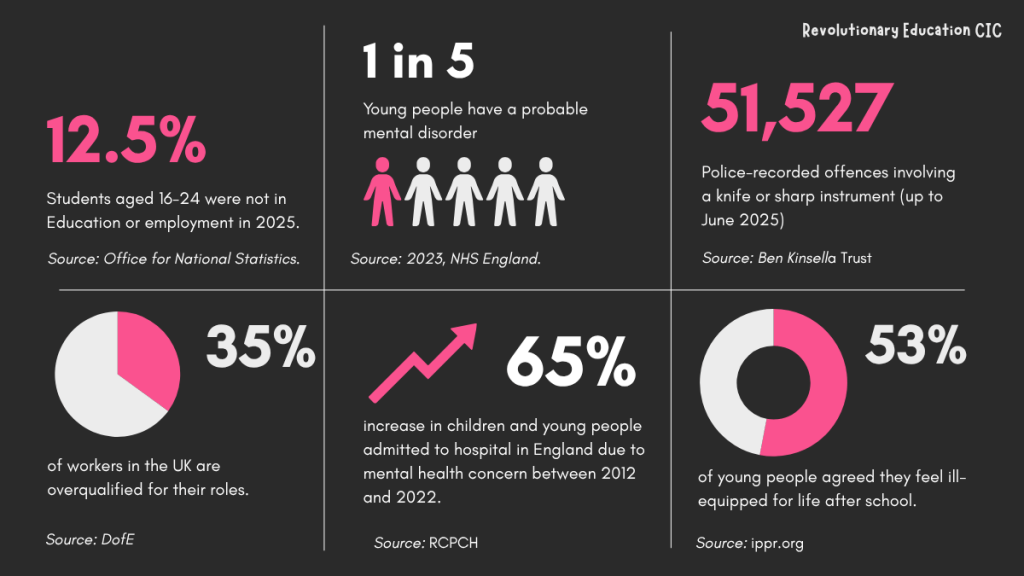
If education is to escape the gravity of its industrial past, it must confront a radical question: What is school for? For over two centuries the dominant answer has been economic — to prepare workers, produce citizens, and preserve social order. Yet, the very system designed for these goals is not achieving them. In the UK, for example, approximately 13.2 % of those aged 16 to 24 were not in education, employment or training (NEET) in July-September 2024 (Office for National Statistics [ONS], 2024). At the same time, workers in England are among the most likely in the OECD to be over-qualified for their jobs — over one-third of employees report higher education than their role requires (Financial Times, 2024), clear signs that the system is misfiring on its supposed economic purpose.
Likewise, on the social order front, indicators such as youth mental health and violence suggest increasing strain rather than stability. Rates of mental-health difficulties among young people in England have risen sharply, with approximately one in five children and adolescents now experiencing a probable mental disorder (NHS Digital, 2023). Hospital admissions for mental-health crises among under-18s increased by 65% between 2012 and 2022 (University College London, 2025), reflecting escalating levels of distress and unmet need. At the same time, youth violence remains persistent: in the year ending March 2024, more than 3,200 knife or offensive-weapon offences were committed by children in England and Wales — around 20 percent higher than a decade ago (UK Government, 2024). These figures collectively signal that, despite its stated role in fostering citizenship and social stability, the education system is struggling to safeguard young people’s wellbeing and belonging.
In other words, schooling isn’t simply failing to meet its declared aims — in some respects it is aggravating the very problems it is meant to prevent. Prioritising rote memorisation, standardised tests and compliance has contributed to disengagement, inadequate development of creativity and critical thinking, and a workforce ill-prepared for innovation. Meanwhile, social disruption and emotional anxiety among young people have grown — a damning indictment of a system still built for industrial discipline, not for human flourishing.
8. From industrial outcomes to human flourishing
Modern schooling was designed for efficiency, not complexity. As Hannon and Peterson (2021) argue, the purpose of education in the 21st century must be to enable thriving lives in a flourishing society and sustainable world. The industrial mindset — sorting, measuring, producing — is poorly equipped for the unpredictability of the digital age. International frameworks such as the OECD’s Learning Compass 2030 (2019) and UNESCO’s Reimagining Our Futures Together (2021) call for systems that nurture wellbeing, agency and a sense of purpose. Biesta (2015) reminds us that education serves three overlapping functions: qualification (knowledge and skills), socialisation (participation in community), and subjectification (becoming an autonomous moral being). The problem is that most schooling remains trapped in the first two. We teach children what to think and how to comply, but rarely help them become themselves. Zhao (2020) reframes this challenge in terms of the entrepreneurial learner — not one driven by profit, but by purpose: able to direct their learning, adapt to change and create value for others.
Contemporary research in cognitive neuroscience, developmental psychology and motivation theory increasingly validates what progressive educators have long assumed: learning is social, emotional and embodied. Immordino-Yang and Damasio (2007) showed that emotion is not a distraction from cognition — it is its foundation: “we feel, therefore we learn.” Studies indicate that intrinsic motivation flourishes when learners experience competence, connection and choice (Deci & Ryan, 2017; OECD, 2022). Schools that integrate wellbeing, movement and play show higher retention and engagement (Tokuhama-Espinosa, 2020; Darling-Hammond et al., 2021). The implication is clear: a future-ready education system must design for these conditions deliberately — not as optional extras, but as the core infrastructure of learning.
Three design principles for a human-centred education
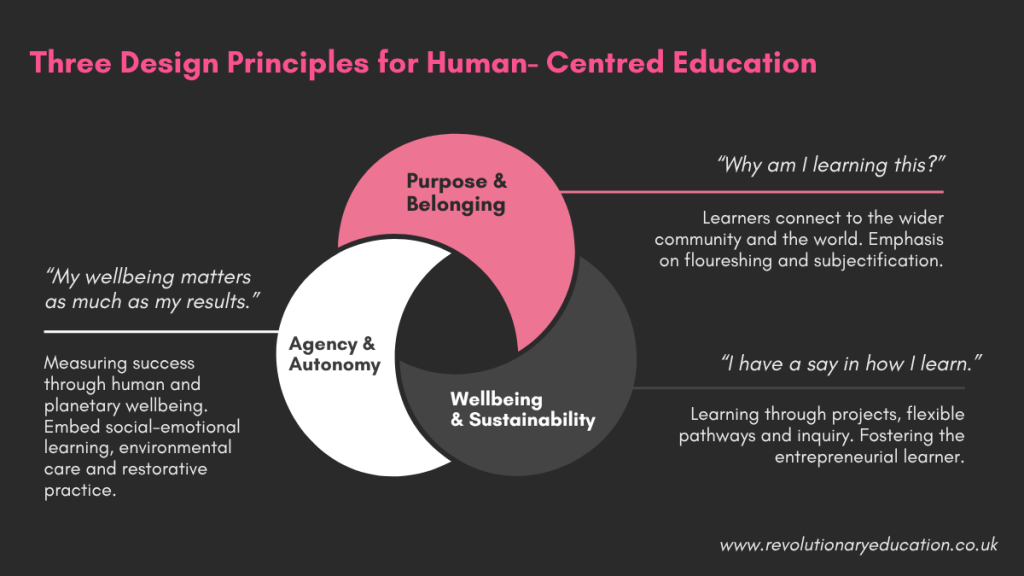
Drawing on Biesta, Hannon and Zhao — and inspired by global models already embracing these ideas — we can distil the transformation ahead into three actionable design principles:
- Design for Purpose and Belonging: Learners should understand why they are learning and how it connects to their community and the wider world — integrating Biesta’s subjectification and Hannon’s emphasis on flourishing.
- Design for Agency and Autonomy: Learners must be active participants, not passive recipients. Flexible pathways, project-based learning and self-directed inquiry cultivate Zhao’s entrepreneurial learner — one capable of navigating uncertainty, taking initiative and innovating with compassion.
- Design for Wellbeing and Sustainability: The ultimate measure of success is not test scores, but the wellbeing of students, teachers and the planet. Schools must integrate social-emotional learning, environmental stewardship and restorative practice as non-negotiable foundations of thriving.
Together, these principles offer a blueprint for transformation — a shift from schooling as production to education as design for life.
To reimagine school is to think like a designer: start with the user — the learner — and build outward. What experiences help young people feel safe, curious, and capable? What environments inspire collaboration rather than competition? What if assessment captured growth instead of ranking? This vision does not reject rigour or knowledge; it reframes them as tools for meaning-making rather than mere credentialing. It calls for schools that operate as communities of practice, where learners co-create knowledge and purpose. As UNESCO (2021) warns, “Education must shift from human capital to human dignity.” In that shift lies the revolution: a new architecture of learning built not to reproduce the past, but to design the future.
9. Conclusion: From Reform to Revolution
For over two centuries, reformers have sought to modernise schooling without questioning its foundations. Yet no amount of new policy or technology can transform a system still designed to produce compliant citizens rather than curious, capable human beings. The incrementalism that once sustained progress now sustains stagnation. If education is to evolve, it must abandon the industrial metaphor entirely — not polishing the factory, but closing it.
Other industries adapt because they understand their users. They study human behaviour, respond to emotion, and design around people’s needs and desires. Education, by contrast, still treats students as the product — raw materials to be shaped, standardised, and graded. The shift we now require is both simple and revolutionary: learners are not the products of education; they are the consumer. This is not a call for consumerism, but for empathy — for a reorientation of design around the lived experience of the learner. When we view students as co-authors rather than outputs, wellbeing, agency, and imagination become our metrics of success. As Biesta (2015) reminds us, education is always a moral and political act.
The future of education will depend on whether we have the courage to reimagine it as a living, human system — one that evolves in rhythm with our collective needs. That means asking not what children can do for the economy, but what education can do for humanity. It means acknowledging that hungry, frightened, or disconnected students cannot learn — and that autonomy, play, and belonging are not luxuries but essentials.
As John Dewey warned, “If we teach today as we taught yesterday, we rob our children of tomorrow.” The revolution education needs will not be built on new tools but on new thinking — a shift from standardisation to humanity, from control to curiosity, from efficiency to empathy. Only then will schools cease to mirror the past and begin to shape the world our children deserve to inherit.
References
Biesta, G. (2015). Good education in an age of measurement: Ethics, politics, democracy. Routledge.
Bourdieu, P. (1977). Outline of a theory of practice. Cambridge University Press.
Bowles, S., & Gintis, H. (1976). Schooling in capitalist America: Educational reform and the contradictions of economic life. Basic Books.
Cuban, L. (2013). Inside the black box of classroom practice: Change without reform in American education. Harvard Education Press.
Darling-Hammond, L., Flook, L., Cook-Harvey, C., Barron, B., & Osher, D. (2021). Implications for educational practice of the science of learning and development. Applied Developmental Science, 24(2), 97–140. https://doi.org/10.1080/10888691.2018.1537791
Deci, E. L., & Ryan, R. M. (2017). Self-determination theory: Basic psychological needs in motivation, development, and wellness. Guilford Press.
Department for Environment, Food and Rural Affairs. (2024). United Kingdom food security report 2024. UK Government. https://www.gov.uk/
Dewey, J. (1916). Democracy and education. Macmillan.
Diamond, A., & Ling, D. S. (2016). Conclusions about interventions, programs, and approaches for improving executive functions that appear justified and those that, despite much hype, do not. Developmental Cognitive Neuroscience, 18, 34–48. https://doi.org/10.1016/j.dcn.2015.11.005
Financial Times. (2024, July 10). A third of UK workers are overqualified for their jobs, OECD data show. https://www.ft.com/
Fichte, J. G. (1808/1922). Addresses to the German nation. Open Court Publishing.
Food Foundation. (2024). Food insecurity tracking: UK household food insecurity report 2024. https://foodfoundation.org.uk/
Gray, P. (2013). Free to learn: Why unleashing the instinct to play will make our children happier, more self-reliant, and better students for life. Basic Books.
Hannon, V. (2021). Thrive: The purpose of schools in a changing world. Cambridge University Press.
Hannon, V., & Peterson, A. (2021). Humanity, education and re-imagining the future: The case for systems thinking. Routledge.
Immordino-Yang, M. H., & Damasio, A. (2007). We feel, therefore we learn: The relevance of affective and social neuroscience to education. Mind, Brain, and Education, 1(1), 3–10. https://doi.org/10.1111/j.1751-228X.2007.00004.x
Joseph Rowntree Foundation. (2024). Hunger in schools: The reality of food insecurity among UK pupils. https://www.jrf.org.uk/
Krishna, A. (2024). Customer sense: How the 5 senses influence buying behavior (2nd ed.). Routledge.
Ministry of Justice. (2024). Youth justice statistics: 2023 to 2024. UK Government. https://www.gov.uk/
Ng, P. T. (2022). Singapore’s response to COVID-19: A learning system perspective. Educational Research for Policy and Practice, 21(1), 1–14. https://doi.org/10.1007/s10671-021-09296-2
NHS Digital. (2023). Mental health of children and young people in England, 2023: Wave 4 follow-up. https://digital.nhs.uk/
Office for National Statistics. (2024). Young people not in education, employment or training (NEET), UK: July to September 2024. https://www.ons.gov.uk/
Organisation for Economic Co-operation and Development. (2019). OECD learning compass 2030. OECD Publishing.
Organisation for Economic Co-operation and Development. (2022). OECD education outlook 2022: Transforming education for the digital age. OECD Publishing.
Organisation for Economic Co-operation and Development. (2023). Education at a glance 2023: OECD indicators. OECD Publishing.
Ramzan, S. (2021). Design psychology: Understanding how humans perceive and interact with products. Springer.
Robinson, K. (2006). Do schools kill creativity? [Video]. TED Conferences. https://www.ted.com/talks/ken_robinson_do_schools_kill_creativity
Robinson, K. (2015). Creative schools: The grassroots revolution that’s transforming education. Viking.
Royal Education Council. (2020). Bhutan education blueprint 2020–2030: Rethinking education. Royal Government of Bhutan.
Sahlberg, P. (2011). Finnish lessons: What can the world learn from educational change in Finland? Teachers College Press.
Schleicher, A. (2023). Building trust in education systems. OECD Publishing.
Tokuhama-Espinosa, T. (2020). Neuroscience of learning and development: Enhancing creativity, compassion, critical thinking, and peace in higher education. Stylus Publishing.
Tyack, D. (1974). The one best system: A history of American urban education. Harvard University Press.
Tyack, D., & Cuban, L. (1995). Tinkering toward utopia: A century of public school reform. Harvard University Press.
Tyack, D., & Tobin, W. (1994). The “grammar” of schooling: Why has it been so hard to change? American Educational Research Journal, 31(3), 453–479. https://doi.org/10.3102/00028312031003453
UNESCO. (2021). Reimagining our futures together: A new social contract for education. UNESCO Publishing.
University College London. (2025, January 15). Significant rise in mental health admissions among young people over the last decade. https://www.ucl.ac.uk/news/