
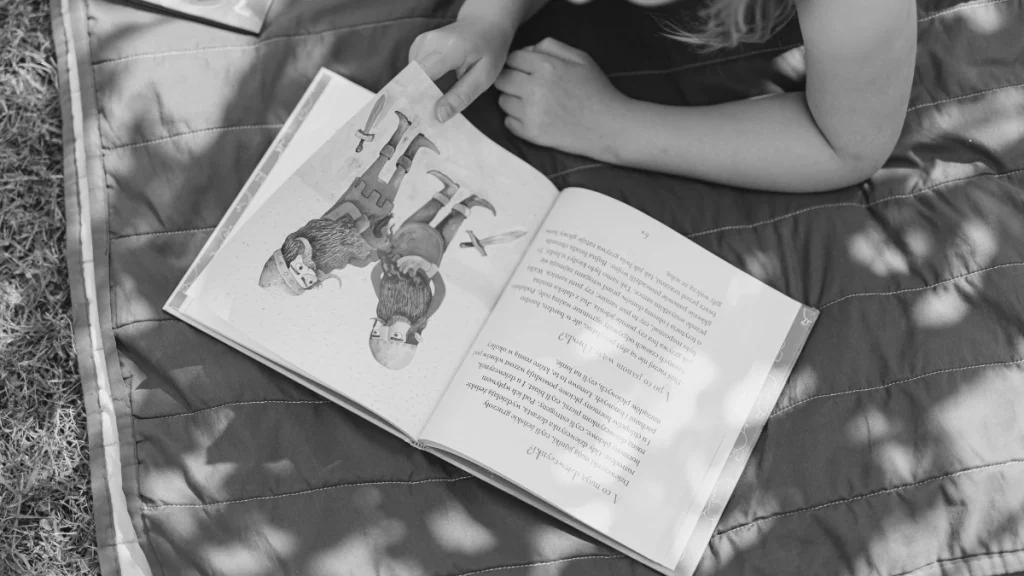
If you’re new to home education, it’s completely normal to feel like you need to turn your kitchen table into a classroom. You might find yourself buying workbooks, printing worksheets, creating timetables and wondering whether your child should be sitting down from 9am until 3pm. And honestly? That makes sense. School is the model most of us know. It feels familiar, structured and measurable at a time when home education can feel new, uncertain and overwhelming.
But here’s the thing: home education isn’t supposed to be a smaller version of school. It’s something different. And when we try to recreate school at home, we can accidentally miss the biggest gift home education offers: the chance to build learning around the individual child in front of us.
Why Do Parents Try to Recreate School at Home?
Most parents don’t recreate school because they think school is perfect. They do it because they’re worried. They’re worried their child will fall behind, that they’re not doing enough, or that they’ll somehow get home education wrong. If that’s you, you’re certainly not alone.
When I first started exploring home education, I found myself reaching for workbooks, timetables and familiar structures because that’s what education had always looked like to me. Over time, though, I realised that some of the richest learning moments happened away from the table entirely: during walks, conversations, projects, questions, play and everyday life.
You don’t have to recreate school to give your child a brilliant education. In fact, one of the biggest strengths of home education is that you don’t have to force your child into a system designed for thirty children in a classroom. Instead, you get to ask a much better question: what does my child actually need to thrive?
Schools Are Designed for Groups. Home Education Can Be Designed for Your Child.
Schools have an incredibly difficult job. They have to educate large groups of children at the same time, often with very different needs, abilities, interests and emotions in one classroom. To make that possible, schools need systems such as bells, timetables, behaviour policies, rewards, sanctions, standardised assessments, age-based expectations and a fixed curriculum.
Those systems aren’t always there because they’re the best way for every child to learn. They’re there because schools need to organise large numbers of children safely and efficiently. But at home, you don’t have thirty children to manage. You have your child.
That means learning can be slower, deeper, more flexible and more personal. You don’t have to rush because the bell has gone. You don’t have to move on because the scheme of work says so. You don’t have to measure your child against everyone else. You can build an education that fits the child in front of you.
Home Education Helps Build Intrinsic Motivation
One of the challenges of recreating school at home is that it can recreate school-style motivation too. In many school settings, children are often motivated by external things: getting a reward, avoiding a consequence, passing a test, pleasing the teacher, earning praise or not getting into trouble. This is called extrinsic motivation.
The difficulty with extrinsic motivation is that it can teach children to ask, “What do I need to do to get the reward or avoid the consequence?” rather than, “Why does this matter?” Over time, children can become very good at compliance. They learn how to get through the task, tick the box, avoid trouble or do just enough. But that’s not the same as deep, meaningful learning.
Home education gives us the opportunity to nurture intrinsic motivation instead. Children can begin to learn because they’re curious, interested and genuinely invested in what they’re doing. They want to solve problems, master skills and explore ideas that matter to them. This type of motivation is often what drives lifelong learning.
That doesn’t mean children only ever do what they want. It means we use their interests, needs and motivations as a starting point. If your child is fascinated by dinosaurs, space, animals, gaming, baking, art, nature, history or storytelling, those interests can become doorways into reading, writing, maths, science, creativity, research and critical thinking.
The National Curriculum Wasn’t Designed for Your Child
The National Curriculum is a framework for schools. It was designed for millions of children, which means it has to be broad, standardised and age-based. But children aren’t standardised. Some children read early. Some need more time. Some are brilliant problem-solvers but hate writing. Some are creative, practical or deeply curious but struggle with worksheets. Some are autistic, ADHD, dyslexic, anxious, traumatised, demand avoidant or recovering from school burnout.
When we start with a curriculum instead of the child, we can quickly fall into panic. Are they behind? Are we doing enough? Should they know this already? What if they’re not where they “should” be?
Home education allows us to flip the question. Instead of asking, “How do I get my child through this curriculum?” we can ask, “What does my child need next?” The curriculum can still be useful. Workbooks can still be useful. Lessons can still be useful. But they’re tools. They’re not the whole of education.
Personalised Learning Is Home Education’s Superpower
Most teachers would love to personalise learning for every child. The reality is that it’s incredibly difficult when one adult is responsible for a whole class of children with different needs, interests, abilities and emotions. Home education gives families something schools often can’t offer at scale: true personalised learning.
You can follow your child’s interests, slow down when something is difficult, speed up when something is easy, take breaks when your child is overwhelmed and adapt your approach when something isn’t working. You can learn through projects, conversations, visits, documentaries, practical tasks, creative work and real-life experiences.
A child who loves animals can explore biology, geography, ethics, writing and research skills through wildlife. A child who loves Minecraft can explore design, coding, architecture, maths and storytelling. A child who loves baking can learn fractions, measuring, science, reading, sequencing and life skills. This doesn’t make the learning less serious. It makes it more meaningful.
Learning Doesn’t Have to Look Like School
One of the biggest mindset shifts in home education is realising that learning doesn’t only count when it looks like a worksheet. Children learn through cooking, gardening, building, reading, playing, walking, asking questions, visiting museums, watching documentaries, caring for animals, making things, exploring nature and helping with real-life tasks.
A trip to the shop can involve maths, budgeting, reading, planning and decision-making. A walk in the woods can become science, geography, art, storytelling and wellbeing. A deep conversation in the car can teach critical thinking, emotional literacy and communication.
Learning isn’t confined to a desk, and it definitely doesn’t have to happen between 9am and 3pm. Some of the richest learning happens when children are relaxed, curious and engaged in real life.
Deschooling Matters
Many children need time to adjust after leaving school. This is often called deschooling. Deschooling is the process of stepping away from school routines, school pressures and school expectations so that your child can begin to reconnect with curiosity, confidence and learning again.
Some children need time to rest. Some need time to play. Some need time to feel safe. Some need time to rediscover who they are outside of grades, behaviour systems and comparison. Parents often need deschooling too. You might need time to unlearn the idea that education has to look like school to be valid. You might need time to trust that your child is still learning, even when it doesn’t look formal.
Deschooling isn’t wasted time. It can be the foundation for a healthier, calmer and more meaningful home education journey.
Wellbeing Isn’t Separate From Education
Many children come to home education because school wasn’t working for them. They may have been anxious, overwhelmed, misunderstood, bullied, unsupported or burned out. If we immediately recreate school at home, we can unintentionally recreate some of the stress they needed to leave behind.
Home education gives us the chance to prioritise wellbeing. That might mean focusing on sleep, movement, outdoor time, emotional regulation, mental health, physical health, connection, confidence and rest. This doesn’t mean academics don’t matter. It means children learn best when they feel safe, regulated and connected.
A calm nervous system isn’t a distraction from learning. It’s the foundation for it.
Home Education Can Make More Space for Creativity
Schools often value creativity, but creativity can be hard to protect in a system driven by tests, timetables and curriculum coverage. Home education gives children more space to follow ideas, experiment, ask unusual questions, make things, solve problems, explore deeply, make mistakes and try again.
Creativity needs time. It needs freedom. It needs room for curiosity. When we stop trying to make home education look exactly like school, we often create more space for the kind of learning children remember.
Socialisation Doesn’t Have to Look Like School Either
A lot of parents worry about socialisation, and that worry can make us feel like we need to recreate school-style experiences at home. But socialisation doesn’t only happen in a classroom with children the same age.
Home educated children can build relationships through home ed groups, sports clubs, theatre groups, volunteering, family friends, community activities, libraries, museums, online groups and mixed-age friendships. In many ways, home education can offer a more natural kind of socialisation because children learn to interact with people of different ages, backgrounds and experiences, not just people born in the same school year.
Relationship Comes Before Compliance
School systems often need to prioritise consistency and efficiency because they’re responsible for large groups of children. At home, we have the chance to do something different. We can slow down conversations around behaviour, choices, boundaries and responsibility.
Instead of relying on arbitrary rules, we can talk about why things matter. Instead of asking, “How do I make my child obey?” we can ask, “What skill, support or understanding does my child need here?” That doesn’t mean children have no boundaries. It means the goal isn’t blind compliance. The goal is helping children develop self-awareness, empathy, responsibility and intrinsic motivation.
What to Do Instead of Recreating School at Home
So if you don’t recreate school at home, what do you do instead? Start small. You don’t need a perfect philosophy, a perfect timetable or a perfect curriculum. You just need to begin noticing what helps your child feel curious, safe, connected and engaged.
One helpful approach is to create a rhythm rather than a rigid timetable. Instead of planning every hour, you might have a gentle flow to the day: breakfast, movement, reading, project time, lunch, practical life skills, outdoor time and creative work. A rhythm gives children security without making the day feel like school.
You can also follow your child’s interests and build learning around them. If your child loves animals, you could read animal stories, research habitats, visit a wildlife park, write a fact file, draw animal diagrams and explore food chains. Interest-led learning can still be rich, academic and purposeful.
Real-life learning is another powerful part of home education. Cooking can teach maths and science. Shopping can teach budgeting. Gardening can teach biology. Planning a trip can teach geography. Writing a letter can teach literacy. Home education gives you the freedom to notice the learning that’s already happening in everyday life.
It’s also okay to use workbooks, lessons and curricula when they help. The point isn’t that anything school-like is bad. The point is that these things should be tools, not the whole plan. Use them when they serve your child. Put them down when they don’t.
Most importantly, focus on connection. Read together, talk together, explore together and be curious together. Your relationship with your child is one of the most powerful parts of home education. A connected child is far more likely to feel safe enough to learn.
Final Thoughts: You Don’t Have to Bring School Home
If you’re new to home education, it’s easy to feel like you need to copy school to prove you’re doing enough. But you don’t. Home education isn’t about recreating school at the kitchen table. It’s about creating an education that works for the unique child in front of you.
That might include structure. It might include workbooks. It might include formal lessons. But it can also include rest, creativity, projects, conversations, nature, real-life learning, play, curiosity and connection.
The point isn’t to reject everything that looks like school. The point is to remember that school is only one model of education. At home, you have the freedom to build something more personal, more flexible and more meaningful.
Home education isn’t about bringing school home. It’s about creating an education that works for the child in front of you. When we stop asking how to recreate school and start asking what our children need to thrive, that’s often when the most meaningful learning begins.